Event 1
Woodruff Manifesto
The [Woodruff Manifesto](entity:event-recall-event-5bae2e3c6c2c) was the 1890 declaration through which [Wilford Woodruff](entity:character-recall-character-wilford-woodruff-36d7ac87f660) announced that the [Church of Jesus Christ of Latter-day Saints](entity:organization-recall-organization-church-of-jesus-2200bb772134) would submit to laws against plural marriage and counsel its members to do the same. It marked a decisive change in the Church’s public policy under federal pressure, but not a clean end to plural marriage or to the religious conflict surrounding it. The declaration instead became a lasting point of dispute: Church leaders treated it as a necessary change in practice, while fundamentalists argued that it had not revoked the underlying divine commandment.
## Background: Competing Claims of Authority
By 1890, the Church’s resistance to federal authority had become increasingly difficult to sustain. Under [Brigham Young](entity:character-recall-character-brigham-young-bf8a15a5d308), the Mormon-dominated [Utah Territorial Legislature](entity:organization-recall-organization-d81b4fb6f806) had expanded local probate courts, whose judges were often bishops and whose juries were largely composed of Church members. This arrangement gave local institutions considerable power to apply religiously informed judgments, even as [Utah](entity:location-recall-location-utah-99abad7dbd3c) remained a territory in which legal authority was supposed to reside in federal courts. Church leaders held that [God](entity:character-recall-character-god-28f937b98b12)’s laws took precedence over human laws; federal officials saw the resulting order as an exercise of theocratic control.
The conflict had sharpened over decades of opposition to plural marriage. Congress passed the Edmunds-Tucker Bill in March 1887, and federal lawyers pursued actions intended to bankrupt the Church. On May 19, 1890, the U.S. Supreme Court allowed Church holdings to be seized by the government. The legal and financial pressures were therefore not abstract: the survival of the Church’s institutional property and its ability to continue operating were at stake.
Woodruff had become the Church’s fourth prophet after [John Taylor](entity:character-recall-character-john-taylor-ddcbb9c70c78) died in 1887. Taylor had died while in hiding from federal authorities, and his resistance had included sending Saints to settlements in the American West, [Mexico](entity:location-recall-location-f1c6a91e03ea), and Canada, where plural marriage could be practiced with less risk of arrest. The new president inherited a crisis that had outlasted his predecessor. In the book’s account, Woodruff recognized painfully that the Kingdom of God had reached a point where it could not avoid yielding to Washington’s demands.
## The Revelation and Public Declaration
On the evening of September 23, 1890, Woodruff took to his bed and spent the night struggling in prayer over what should be done in the circumstances facing the Church. The following morning, he called five trusted Church leaders together. He told them that he had received a revelation directing the Church to relinquish the practice for which its members had been willing to sacrifice their lives. The decision stunned the men present: Woodruff described the change not as a matter of preference, but as the Lord’s will.
On October 6, the revelation was formalized in a short document known as the Woodruff Manifesto. It referred to congressional laws against plural marriages and to the court’s judgment that those laws were constitutional. Woodruff declared his intention to submit to those laws and to use his influence to encourage Church members to do likewise. He publicly advised Latter-day Saints to refrain from entering marriages forbidden by the law of the land. The statement thus joined a claim of revelation to an explicit commitment to legal compliance.
The form of the change mattered. Woodruff did not announce that the Church’s scripture on plural marriage had been removed. He declared that the Church would stop sanctioning the practice and publicly counsel obedience to the law. His declaration carried the authority of the Church president and prophet, a role whose title and standing were rooted in the Mormon expectation of continuing revelation. But within a faith that had also prized personal revelation, an authoritative declaration could not prevent all members from appealing to what they understood as God’s earlier commands.
## Aftermath: A Public End and Private Continuation
The Manifesto shook the Mormon community, but it did not immediately end plural marriage. For the next two decades, members of the [First Presidency](entity:organization-recall-organization-f9b8ea2ab39d) privately advised Saints that the practice should continue discreetly, and senior Church leaders secretly performed plural marriages. The public policy and private conduct therefore diverged: a document urging submission to the law coexisted with clandestine continuation of the practice among some Church leaders.
That divergence became a fresh source of conflict when it came to light. In October 1910, the Salt Lake Tribune published the names of about two hundred Saints who had taken plural wives after the Manifesto, including six members of the [Quorum of the Twelve Apostles](entity:organization-recall-organization-4e7fdd30c24d). The resulting outrage came not only from non-Mormons but from prominent members of the Church. A movement within the institution called for enforcement of the Manifesto and the eradication of plural marriage. By the 1920s, most Saints, including Church leaders, had turned against the practice and were encouraging prosecutions of those who continued it.
The episode also exposed the limits of a public declaration as a means of settling religious practice. A pronouncement could redirect institutional policy, but it could not make every believer accept the interpretation behind it. The Manifesto brought the Church into more direct alignment with federal law, while the gap between official policy and secret practice damaged trust and deepened disagreements over who could define the faith’s obligations.
## Fundamentalist Rejection and Continuing Significance
A significant number of dedicated Saints concluded that Woodruff had been mistaken and that obedience to the Manifesto contradicted the religion’s most sacred principles. They argued that it had not revoked [Section 132 of the Doctrine and Covenants](entity:object-recall-object-132-176489db1ec1), [Joseph Smith](entity:character-recall-character-joseph-smith-550057e1cec3)’s 1843 revelation on plural marriage; in their view, the Manifesto had suspended the practice under exceptional circumstances, not abolished the commandment. Section 132 remained part of Mormon scripture, supplying a textual basis for their claim.
These fundamentalists also drew authority from a revelation they attributed to John Taylor, dated September 26, 1886. It affirmed that commandments remained binding unless revoked by God or by his authority, and declared the plural-marriage law everlasting. This belief placed competing revelations and competing interpretations of prophetic authority in direct tension: Woodruff’s 1890 instruction to submit to the law stood against the fundamentalist reading of Taylor’s earlier revelation and Joseph Smith’s scripture.
The dispute extended into later generations. [Dan Lafferty](entity:character-recall-character-dan-lafferty-ae90fec8bf4e) became convinced that the Church had gone astray around 1890, when, in his view, Wilford Woodruff had yielded the doctrine of plural marriage to a godless government. His opposition to government regulation also drew on a wider argument that licenses, taxes, and Social Security requirements intruded on individual rights. In this later setting, the Manifesto was not merely a historical change in marriage policy; it served as evidence, for some dissenters, that the institution had compromised its religious authority.
The conflict continues to frame claims about religious liberty. Fundamentalists have maintained that plural marriage is a constitutionally protected belief and that government should not interfere in their homes, while plural marriage remains illegal in all fifty states and in Canada. The Woodruff Manifesto therefore stands at the intersection of revelation, institutional authority, and civil law. It ended official Church support for plural marriage, but its ambiguous relationship to scripture, its secretive aftermath, and the enduring fundamentalist rejection ensured that it became a boundary marker as much as a resolution.
Event 2
Utah War
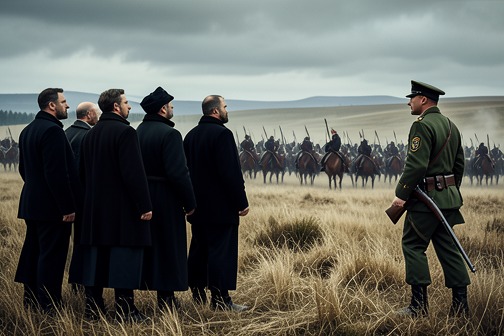
The [Utah War](entity:event-recall-event-utah-war-eff00f61e014) was an 1857–1858 confrontation between the United States government and the Mormon-led society in [Utah Territory](entity:location-recall-location-b6f514b16e2f). President [James Buchanan](entity:character-recall-character-james-buchanan-8262fbefda1e) sent a new governor and 2,500 soldiers to assert federal authority, but the campaign ended in negotiation before a shot was fired. Its larger significance lay in what it failed to resolve: neither [Brigham Young](entity:character-recall-character-brigham-young-bf8a15a5d308)’s leadership nor plural marriage ended, and the contest between national law and religiously grounded local power continued by other means.
## Background: Religious Authority and Political Power
The conflict grew from more than a dispute over an appointment. Under Brigham Young, the Saints defended plural marriage as a sacred religious practice and rejected the idea that the federal government could require them to abandon it. Young argued that divine law took precedence over human law, particularly laws imposed by non-Mormons. The federal government, by contrast, regarded the church’s political and legal influence in the territory as a challenge to its authority.
The organization of Mormon power had a significant precedent in [Nauvoo](entity:location-recall-location-nauvoo-ce60de713cb4), where [Joseph Smith](entity:character-recall-character-joseph-smith-550057e1cec3) led a theocratic principality established under a distinctive city charter. That earlier arrangement had joined religious leadership with civic power. In [Utah](entity:location-recall-location-utah-99abad7dbd3c), the same larger question persisted: where the boundaries of church authority and civil government should lie, and whose laws would prevail when they conflicted.
## The Federal Expedition
In May 1857, Buchanan accused the Mormons of a series of treasonous acts and dispatched federal officials to restore what he called the rule of law in Utah. He appointed a new territorial governor to replace Young and sent 2,500 heavily armed soldiers to escort the officials to [Salt Lake City](entity:location-recall-location-salt-lake-city-858c034c1641) and subdue the Saints if necessary. The scale of the deployment made the intervention resemble a declaration of war, even though its stated administrative purpose included installing a small group of officials in a distant territory.
The episode became known as the Utah War, but its military character was limited. Historians have compared it to comic opera: the United States had sent the largest peacetime army in its history to oversee the installation of a handful of officials in a minor territory. A settlement was ultimately negotiated before the Saints and American soldiers exchanged a single shot. The mismatch between the size of the force and the bloodless resolution became part of the event’s enduring character.
## Competing Legal Orders
The confrontation reflected a deeper struggle over jurisdiction. Because Utah remained a territory rather than a state, federal courts were supposed to hold legal power. The Mormon-dominated [Utah Territorial Legislature](entity:organization-recall-organization-d81b4fb6f806) expanded local probate courts, which Young controlled, and thereby displaced federal jurisdiction in important areas. Many probate judges were Mormon bishops, while juries were largely composed of church members who were instructed by church leaders. Federal officials complained that Young had turned the territory into a theocratic dictatorship.
This local legal order gave institutional form to the claim that [God](entity:character-recall-character-god-28f937b98b12)’s law outranked the laws of the United States. It also helps explain why replacing a governor could not, by itself, settle the conflict: competing authorities were embedded in the territory’s courts and political arrangements, as well as in religious doctrine. Later critics of government regulation likewise framed demands such as licensing and taxation as illegitimate intrusions on rights they understood as fundamental, a position that echoed the older dispute over the reach of federal power.
## Aftermath and Continuing Dispute
The Utah War neither removed Young from power nor ended plural marriage. Its failure to settle those questions frustrated successive American presidents, and legal and legislative challenges continued. That pressure culminated in the [Edmunds-Tucker Act](entity:rule-recall-rule-735a42244775) of 1887, which disincorporated the LDS Church and transferred to the federal government church property worth more than $50,000. Under sustained pressure, church leaders publicly renounced plural marriage in 1890. They also quietly sent groups of Mormons to establish polygamous colonies in [Mexico](entity:location-recall-location-f1c6a91e03ea) and Canada, while some senior LDS authorities secretly continued plural marriages into the twentieth century.
The change in church policy eventually helped the LDS Church gain acceptance in American public life, but [Mormon Fundamentalists](entity:organization-recall-organization-a93a5cdc1fd7) regarded the abandonment of plural marriage as a betrayal of a central religious principle. Some later fundamentalists treated the 1890 decision as capitulation to a godless government and concluded that the modern church had departed from its true course. In that sense, the Utah War did not simply conclude in a bloodless compromise: it marked an early, unresolved confrontation in a long struggle over religious freedom, federal authority, and the legitimacy of plural marriage.
Event 3
Passage of the Edmunds–Tucker Act
The [Passage of the Edmunds–Tucker Act](entity:event-recall-event-8acafc1a398d) in 1887 was a decisive escalation in the United States government’s campaign against plural marriage. It did not by itself end the practice: rather, it tightened the pressure on the [Church of Jesus Christ of Latter-day Saints](entity:organization-recall-organization-church-of-jesus-2200bb772134) after earlier federal efforts had failed, and helped drive a public renunciation whose private and religious consequences continued long afterward.
## Background: A contest over law and authority
The federal confrontation grew out of a broader dispute over whether religious authority or civil government would prevail when their demands conflicted. In [Utah](entity:location-recall-location-utah-99abad7dbd3c), [Brigham Young](entity:character-recall-character-brigham-young-bf8a15a5d308) and Church leaders treated plural marriage as a sacred obligation, while the federal government regarded it as unlawful. The earlier [Utah War](entity:event-recall-event-utah-war-eff00f61e014) had neither removed Brigham Young from power nor ended the doctrine, and succeeding presidents faced the persistence of the practice.
The dispute was also institutional. Because Utah remained a territory, federal courts were supposed to hold legal authority. The [Utah Territorial Legislature](entity:organization-recall-organization-d81b4fb6f806), dominated by Mormons, expanded the powers of local probate courts controlled by Brigham Young. Many probate judges were Mormon bishops, and juries were composed largely of Church members who followed instructions from Church leaders. This system placed local religious influence inside the machinery of civil justice, and federal officials saw it as an appropriation of federal jurisdiction. The Edmunds–Tucker Act arrived after this prolonged struggle over not only marriage, but also who could make and enforce the law.
## Passage and immediate pressure
The Act formed the culmination of an escalating series of judicial and legislative challenges to plural marriage. Its provisions disincorporated the Church of Jesus Christ of Latter-day Saints and made Church property valued at more than $50,000 liable to forfeiture to the federal government. The pressure was therefore directed at the Church as an institution as well as at the practice it defended.
The Act’s significance lay partly in the contrast with the failed military intervention that preceded it. The Utah War had not ended plural marriage; the later legal campaign instead exerted sustained pressure through legislation and the threat to the Church’s corporate standing and property. The book presents the resulting pressure as leaving Church leaders with no practical choice but to renounce the practice publicly.
## Public renunciation and private continuation
In 1890, Church leaders publicly claimed to have relinquished plural marriage. The declaration did not immediately bring the practice to an end. Mormon groups were quietly sent to establish plural-marriage colonies in [Mexico](entity:location-recall-location-f1c6a91e03ea) and Canada, while some of the Church’s highest-ranking authorities continued to take multiple wives and perform plural marriages well into the twentieth century. The public policy and the private continuation thus diverged: the Act helped force a formal institutional retreat, but not an immediate or complete disappearance of the practice.
Over time, Church leaders adopted a more pragmatic approach to American politics, rejected plural marriage, and began urging government agencies to prosecute polygamists. The shift helped the Church move into the American religious mainstream. What had been defended as a central covenant became a practice from which the institution officially distanced itself, and the consequences extended beyond compliance with federal law to the Church’s public identity.
## Long aftermath and competing claims of legitimacy
[Mormon Fundamentalists](entity:organization-recall-organization-a93a5cdc1fd7) interpret the renunciation as a grave compromise: in their view, Church leaders surrendered a crucial theological principle for political acceptance. They claim to preserve the faith’s original commitment to plural marriage and present themselves as its true custodians. The conflict therefore persisted as a dispute over religious legitimacy even after official Church policy changed.
The episode also reveals the limits of a simple account in which state law cleanly replaces religious rule. Federal pressure altered the Church’s public policy and its relationship to government, while secret continuation and the later fundamentalist rejection of the compromise kept the underlying religious dispute alive. The Act was both a legal blow and a turning point in the Church’s transformation, but its passage did not settle who had the authority to define faithful Mormon practice.
Event 4
LDS Church's 1890 Abandonment of Plural Marriage
The LDS Church's 1890 abandonment of plural marriage was both a retreat from a doctrine long treated as sacred and a turning point in the church's relationship with the United States. Public renunciation did not immediately end the practice: church authorities quietly sustained it abroad and, for a time, within their own ranks. The later enforcement of the new policy helped transform the church, while those who rejected the change regarded it as a betrayal of the faith.
## Doctrine and Competing Authority
[Plural marriage](entity:rule-recall-rule-plural-marriage-ac4e0821346e) had deep theological standing in the church. [Joseph Smith](entity:character-recall-character-joseph-smith-550057e1cec3)'s revelation on the subject was canonized as Section 132 of [The Doctrine and Covenants](entity:object-recall-object-742d3576e0eb), and presented the practice as a requirement for exaltation for those to whom the law had been revealed. The doctrine was formally codified in [Nauvoo](entity:location-recall-location-nauvoo-ce60de713cb4) in 1843, though it remained secret and was not publicly acknowledged until 1852, eight years after Joseph Smith's death.
The conflict was not simply over marriage customs. In Nauvoo, Joseph Smith had headed a city with unusual sovereign powers; later, under [Brigham Young](entity:character-recall-character-brigham-young-bf8a15a5d308), the Saints established a theocratic order in the [Great Basin](entity:location-recall-location-9e53d9ef1bd4). Brigham Young argued that [God](entity:character-recall-character-god-28f937b98b12)'s law took precedence over human law. [Utah](entity:location-recall-location-utah-99abad7dbd3c)'s Mormon-dominated legislature expanded local probate courts, which Brigham controlled, into a means of asserting local jurisdiction against federal authority. Mormon bishops commonly served as probate judges, and predominantly Mormon juries followed instructions from church leaders. The resulting contest concerned which authority—church, territorial, or federal—could define and enforce the rules governing the community.
## Federal Pressure and Renunciation
The [Utah War](entity:event-recall-event-utah-war-eff00f61e014) did not remove Brigham Young from power or end plural marriage. Instead, a succession of legal and legislative challenges continued. Their culmination was the [Edmunds-Tucker Act](entity:rule-recall-rule-735a42244775) of 1887, which disincorporated the LDS Church and transferred to the federal government church property valued above $50,000. Under this pressure, church leaders ultimately had little practical choice but to renounce the practice publicly.
In 1890 the LDS Church declared that it had relinquished plural marriage. The announcement marked a sharp change from its earlier defense of the doctrine as sacred and its resistance to federal efforts to suppress it. But the public statement and private conduct did not immediately coincide: leaders who had been reluctant to abandon plural marriage formally retreated while discreetly maintaining a path for its continuation.
## Public Policy and Private Continuity
After the renunciation, church authorities quietly dispatched groups of members to establish plural-marriage colonies in [Mexico](entity:location-recall-location-f1c6a91e03ea) and Canada. Some high-ranking LDS authorities also secretly continued taking multiple wives and performing plural marriages well into the twentieth century. The shift therefore unfolded in stages: public policy changed in 1890, but the practice persisted in concealed forms after that date.
The church's position eventually changed more decisively. Leaders adopted a pragmatic approach to American politics, rejected plural marriage emphatically, and began urging government agencies to prosecute polygamists. This reversal made the church an enforcer of a policy it had once resisted, rather than merely a religious body under pressure to comply. It also sharpened the distinction between official church membership and the separate communities that continued to defend plural marriage.
## Transformation and Legacy
The book treats the policy change as a central reason the LDS Church became its modern, broadly accepted institution. As the church abandoned plural marriage, Mormons gradually ceased to be regarded as a marginal sect, and the LDS Church acquired the standing of a conventional faith—eventually becoming widely identified as a quintessentially American religion. That transformation came through accommodation to federal power, not through a simple disappearance of the doctrine or its adherents.
[Mormon Fundamentalists](entity:organization-recall-organization-a93a5cdc1fd7) interpret the same history in the opposite way. They regard the 1890 decision as an unforgivable compromise in which church leaders surrendered a crucial theological principle for political acceptance. Because they continue to treat Section 132 as authoritative, they see themselves as preserving what the LDS Church abandoned. The renunciation thus became more than a change in institutional policy: it established a lasting boundary between a church remaking its public identity and fundamentalist groups claiming continuity with its earlier commitments.
Event 5
Joseph Smith's Murder
[Joseph Smith's Murder](entity:event-recall-event-bfb415f2651c) in 1844 ended the leadership of the founding prophet and was followed by [Brigham Young](entity:character-recall-character-brigham-young-bf8a15a5d308)'s succession and the Saints' westward move to the [Great Basin](entity:location-recall-location-9e53d9ef1bd4). In the book's historical account, the killing marks a change of leadership, not an end to the religious and political order Smith had built: plural marriage continued, and conflict over the practice endured for decades.
## [Nauvoo](entity:location-recall-location-nauvoo-ce60de713cb4) and the religious order
Before his death, [Joseph Smith](entity:character-recall-character-joseph-smith-550057e1cec3) had made Nauvoo, [Illinois](entity:location-recall-location-17df7ac1968d), the center of an unusually powerful religious community. Its charter gave the city sovereign rights and powers, and Smith stood at its head. He also commanded the [Nauvoo Legion](entity:organization-recall-organization-f1a3c62f0865), a disciplined militia, and sought authorization from Congress for a much larger force under his control. These details establish the political scale of the leadership that ended with his murder, though the account does not identify them as the immediate cause of the killing.
The movement's religious claims also drew a sharp boundary between the faithful and outsiders. [The Book of Mormon](entity:object-recall-object-70213179a809) described humanity as belonging to one of two churches, while Smith's teaching about the Saints' divine inheritance in [Missouri](entity:location-recall-location-f321c7abc52b) reinforced their identity as [God](entity:character-recall-character-god-28f937b98b12)'s chosen people. Such claims formed part of the wider context of conflict around the movement; the account does not connect any one of them directly to the mob's actions in Illinois.
## The killing and succession
The account identifies the event briefly: a mob hostile to the Mormons murdered Joseph Smith in Illinois in 1844. It does not develop the circumstances of the attack in this passage. Its emphasis falls instead on what followed. Brigham Young assumed leadership of the church and led the Saints into the Great Basin, where they established a new center of power.
The transition was consequential rather than doctrinally decisive. Under Brigham Young, the Saints continued to embrace plural marriage, described in the account as a covenant of spiritual wifery. Joseph's death therefore altered who led the church without immediately displacing a practice central to its religious life.
## Aftermath and significance
The continuation of plural marriage carried the conflict into a new period. The [Utah War](entity:event-recall-event-utah-war-eff00f61e014) did not remove Brigham Young from power or end the practice. Later judicial and legislative pressure culminated in the [Edmunds-Tucker Act](entity:rule-recall-rule-735a42244775) of 1887, which disincorporated the church and transferred church property worth more than $50,000 to the federal government. In 1890, church leaders publicly announced that they had relinquished plural marriage, while the account says that some authorities secretly continued the practice and that Mormon colonies were established in [Mexico](entity:location-recall-location-f1c6a91e03ea) and Canada.
Joseph Smith's Murder thus stands at the hinge between the church's founding period and its expansion under Brigham Young. It was followed by migration and institutional continuity, while the dispute over plural marriage grew into a prolonged confrontation with federal authority. The eventual public rejection of the practice helped the church become more acceptable to the wider American public, a transformation the book associates with a later change in ecclesiastical policy rather than with the killing itself.
Event 6
Short Creek Raid
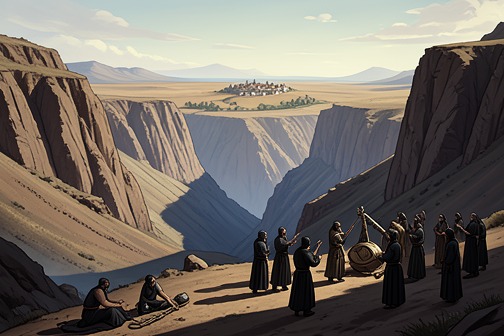
The [Short Creek Raid](entity:event-recall-event-555cde2e3eba) was a major 1953 state operation against a Mormon fundamentalist community whose members practiced plural marriage outside the law. Intended to suppress the practice, it brought mass arrests and the removal of children from their families. Yet its aftermath reversed the operation’s apparent purpose: public sympathy for the community helped shield it from sustained government intervention for much of the next half-century.
## A Settlement Beyond Easy Reach
[Short Creek](entity:location-recall-location-short-creek-aaea86b6c376), later known as Colorado City, had been settled in the 1920s by about half a dozen fundamentalist families seeking a place where they could follow [Joseph Smith](entity:character-recall-character-joseph-smith-550057e1cec3)’s Most Holy Principle without outside interference. The community’s isolation was both a practical condition and part of its appeal. The shortest road from Short Creek to the Mohave County seat of Kingman was 400 miles; cliffs lay to the north, broad dry plateaus stretched east and west, and the [Grand Canyon](entity:location-recall-location-grand-canyon-9dffe0cbbf00) lay to the south. Within this remote setting, the community grew around a religious order that gave plural marriage a central place.
By the early 1950s, Short Creek’s population had passed 400. That growth alarmed Arizona officials and the leadership of the [Church of Jesus Christ of Latter-day Saints](entity:organization-recall-organization-church-of-jesus-2200bb772134) in [Salt Lake City](entity:location-recall-location-salt-lake-city-858c034c1641). With encouragement and financial backing from the Church, Arizona governor Howard Pyle devised a plan to raid the settlement and suppress polygamy. The conflict was not simply over whether state law applied: the community asserted a religious right to practice its faith, while state authorities treated its scale and persistence as a challenge to their power to enforce the law.
## The Predawn Operation
On July 26, 1953, eight months before [DeLoy Bateman](entity:character-recall-character-deloy-bateman-609604fb9ddb) was born, a force of roughly one hundred state police officers, forty county deputies, and dozens of Arizona National Guard troops entered Short Creek before dawn. They arrested 122 men and women, including Bateman’s father. The children were dealt with separately: 263 were declared wards of the state, transported 400 miles to [Kingman, Arizona](entity:location-recall-location-kingman-arizona-fb77360ee74c), and placed in foster care. The raid thus reached beyond its adult targets, separating children from parents as part of the state’s attempt to break the community’s religious practice.
Pyle defended the operation in a multipage public statement, presenting it as a major police action against insurrection within Arizona. His account cast the community’s leaders as having grown so powerful that they openly boasted the state could not interfere. The language made clear how officials understood the dispute: not as a narrow disagreement about marriage law, but as a test of whether a secluded religious community could resist state authority.
## Public Backlash and Reunification
The raid drew national attention. The New York Times gave it front-page prominence comparable to its coverage of the armistice ending the Korean War. But extensive coverage did not produce the public support the operation’s backers might have expected. Photographs of children being taken from their mothers helped shift sympathy toward the fundamentalists, who presented themselves as law-abiding Mormons seeking to exercise constitutionally protected religious freedoms. The day after the raid, the Church-owned [Deseret](entity:location-recall-location-deseret-c4b684daa5f5) News had endorsed the action and hoped the community’s activities would be ended. Much of the wider press, however, questioned the government’s conduct; the Arizona Republic criticized the operation as a misuse of public funds.
The political and financial costs were substantial. Pyle was voted out of office in 1954, largely because of the raid and the damage it did to his standing. Arrests and trials cost taxpayers $600,000. By 1956, every person arrested had been released, and the families had reunited in Short Creek. Members of the [United Effort Plan](entity:organization-recall-organization-united-effort-pl-37c4b3d06712) resumed living the Principle as taught by Joseph Smith. With large families and a high birth rate, the town’s population continued to more than double each decade. The operation had imposed a severe, temporary disruption without dissolving the community or ending plural marriage there.
## A Reversal in the Longer History
The raid’s most consequential result was the backlash it generated. What officials intended as a demonstration of state power became, in the eyes of many observers, an example of government overreach against a religious minority. That reversal created a political caution around renewed intervention: for most of the next half-century, Mormon fundamentalists were able to practice plural marriage across the Intermountain West with relatively little state interference. In this account, the raid stands as a turning point not because it permanently suppressed the community, but because the spectacle of the state removing children helped strengthen the community’s claim that it was being persecuted.
That protection was not permanent. In May 1998, a battered teenage girl called police from a truck stop in northern [Utah](entity:location-recall-location-utah-99abad7dbd3c), bringing renewed attention to plural marriage and the treatment of young women in fundamentalist communities. The episode marked a change in the public and legal climate after decades in which the memory of Short Creek had made officials wary of intervention. The raid therefore carries a double legacy: it demonstrated the state’s capacity to arrest adults and remove children, while its political failure helped preserve the community and made subsequent efforts to address abuses more fraught.
Event 7
Founding of the Church of Jesus Christ of Latter-day Saints
The founding of the [Church of Jesus Christ of Latter-day Saints](entity:organization-recall-organization-church-of-jesus-2200bb772134) in 1830 established a religious movement whose authority rested on a newly published scripture and a claim to restore the true church. [The Book of Mormon](entity:object-recall-object-70213179a809) supplied more than a sacred text: it gave the movement a history rooted in the Americas, a sharp moral boundary between the faithful and their opponents, and a framework for gathering believers into a distinct community.
## Publication and formal organization
Nine months after [Joseph Smith](entity:character-recall-character-joseph-smith-550057e1cec3) completed the translation of the gold plates, the 588-page Book of Mormon came off the press and went on sale at a brick storefront in downtown [Palmyra](entity:location-recall-location-palmyra-1489dca4c260). Little more than a week later, on April 6, 1830, Joseph Smith formally incorporated the religion now known as the Church of Jesus Christ of Latter-day Saints. The sequence joined publication and institution-building closely: the new church took as its foundation and guiding scripture the translation that had just entered public circulation.
The book’s account of its own origins gave that foundation a claim to sacred authority. Converts who accepted Joseph Smith’s account of receiving the gold plates could also accept the Book of Mormon as a further testament and a more complete account of sacred history. The new religious body presented itself not simply as another Christian congregation, but as the restoration of a church that had been lost.
## Restoration, American history, and moral boundaries
Joseph Smith taught that Christian leadership had gone astray after the crucifixion of [Jesus Christ](entity:character-recall-character-jesus-christ-1861cf215964), a departure described as the Great [Apostasy](entity:state-recall-state-apostasy-cad4dfec5cf7). In this account, the Book of Mormon corrected a history distorted by later Catholic and Protestant doctrine and restored the true Church of Christ. Its central moral picture was stark: humanity belonged to one of two churches, associated with the Lamb of [God](entity:character-recall-character-god-28f937b98b12) or the devil. That division made religious belonging a decisive marker of righteousness rather than a matter of affiliation alone.
The scripture also placed sacred history on American ground. Most of its narrative took place on the American continent; Jesus Christ appeared there after his resurrection to teach a chosen people; and Moroni delivered the plates to Joseph Smith. The book further located the Garden of Eden in America and anticipated Christ’s return in that same part of the world. These claims made the movement’s geography part of its theology and gave American converts a central place in the sacred story.
Personal revelation reinforced the church’s claim to renewed access to divine authority. Joseph Smith encouraged followers to seek communications from God themselves, making revelation a foundation of religious life as well as a source of prophetic leadership. The combination of a shared scripture and the possibility of personal revelation helped bind the new movement while preserving a continuing role for prophetic direction.
## A chosen people and conflict with neighbors
As the Saints gathered in [Missouri](entity:location-recall-location-f321c7abc52b), the identity formed around restoration became a source of conflict as well as solidarity. Joseph Smith’s revelations identified [Jackson County](entity:location-recall-location-jackson-county-d93162019e26) as a divinely appointed gathering place, and the Saints were instructed to build a New Jerusalem there. Their conviction that they were God’s chosen people, with a divine right to claim the region as Zion, intensified local suspicion amid a large influx of largely northeastern migrants into a population with different regional and political commitments.
The friction was not only theological. The Saints bought extensive tracts of land with church funds, favored commerce with other Saints, and voted as a disciplined bloc in accordance with Joseph Smith’s directives. Residents feared that the growing community would dominate local politics; a newspaper letter warned that county officials might soon be Mormons. The book also describes the Saints’ limited interest in associating with neighbors who rejected their understanding of God’s plan. Joseph Smith framed the choice as freedom to take either the Lord’s side or the side of wickedness, while treating a deliberate rejection of the Saints’ God as grounds for withholding sympathy. Thus the movement’s language of choice existed alongside a forceful social boundary between believers and outsiders.
## Institutions, rituals, and the legacy of belonging
The church’s doctrines and rituals continued to develop after its founding. In [Nauvoo](entity:location-recall-location-nauvoo-ce60de713cb4), Joseph Smith introduced proxy baptism for the dead and the temple endowment ceremony, taught that God had once been a man, and presented human beings as capable of becoming gods. He also formally codified plural marriage in 1843, though that revelation remained secret and was not acknowledged until 1852. These later developments show how the institution’s founding claim of continuing revelation could support substantial theological innovation, while the secrecy surrounding plural marriage also exposed tensions between public identity and private practice.
The founding community’s collective identity was reaffirmed through later ritual and gathering. After Joseph Smith’s murder and the acquittal of the men charged with killing him, [Brigham Young](entity:character-recall-character-brigham-young-bf8a15a5d308) directed church authorities to establish an [Oath of Vengeance](entity:rule-recall-rule-oath-of-vengeance-2244634fb525) within the temple endowment. Participants pledged to pray for vengeance against the nation and to teach that obligation to their descendants; the oath remained part of the ritual until its removal in 1927, after it became public and provoked an outcry. The episode shows how sacred ritual could give institutional form to shared grievance as well as shared faith.
A modern expression of communal belonging appears at the annual [Hill Cumorah](entity:location-recall-location-hill-cumorah-fde3aa4f91dd) Pageant, staged since 1937 at the site associated with Joseph Smith’s recovery of the plates. More than ten thousand Saints gather for the summer production, and although nonmembers are invited, more than 95 percent of attendees already belong to the church. The pageant’s scale and recurring return to the founding story make the gathering less primarily a conversion event than a celebration of shared testimony and origins. From its first publication, the church’s founding story has therefore served not only as an account of restored authority, but also as a continuing means of defining who belongs to the community.
Event 8
Gary Mark Gilmore Trial
The [Gary Mark Gilmore Trial](entity:event-recall-event-2e92472ab3bc) was a notorious 1976 trial for the unprovoked murders of two young Mormons. In the account, it enters chiefly through Judge Bullock: his earlier role presiding over the case supplies context for the severity of his later response to [Dan Lafferty](entity:character-recall-character-dan-lafferty-ae90fec8bf4e)’s crimes.
## The Trial in the Account
The book identifies the proceeding as a history-making trial that Judge Bullock had presided over in 1976. It gives no further account of the trial’s course, evidence, verdict, or sentence, so its place here is a pointed reference rather than a separately narrated episode.
## Judge Bullock and the Later Sentencing
Nearly a decade later, Bullock presided over Dan Lafferty’s trial for the murders of [Brenda Lafferty](entity:character-recall-character-brenda-lafferty-2d49078a82a5) and [Erica Lafferty](entity:character-recall-character-erica-lafferty-3e5d5befb5a7). After the jury failed to agree unanimously on a death sentence, Bullock condemned the murders and Dan’s lack of remorse, then ordered that he spend the rest of his life behind bars. Recalling the earlier Gilmore trial frames Bullock as a judge already associated with a notorious murder case, while the later sentencing shows his emphatic response to another.
## Narrative Significance
The brief comparison links two trials through the judge who presided over them, not through any stated similarity in their evidence or outcomes. Gilmore’s case serves as background to the account of Dan’s sentencing and underscores how the book places the [Lafferty murders](entity:action-recall-action-lafferty-murders-214d3f921206) within a wider history of high-profile criminal proceedings.
Event 9
Brenda and Erica Lafferty murder case
The [Brenda and Erica Lafferty murder case](entity:event-recall-event-01be40358aeb) centers on the [July 24, 1984](entity:time-recall-time-july-24-1984-1acb8ca6090a), killings of [Brenda Lafferty](entity:character-recall-character-brenda-lafferty-2d49078a82a5) and her fifteen-month-old daughter, Erica, in their [American Fork](entity:location-recall-location-american-fork-b1a904acbe2f) home. The crime transformed a family already known in [Utah County](entity:location-recall-location-utah-county-66572b3d068e) into the focus of a statewide search and a dispute over religious authority, responsibility, and mental competence. The book traces the killings not only through the brothers’ actions, but also through the revelation that preceded them, the warnings that were not passed to police or the intended victims, and the later legal challenge to Ron Lafferty’s conviction.
## Family, revelation, and intended targets
Before the killings, the Lafferty family had been admired for its industriousness and devotion to the [Church of Jesus Christ of Latter-day Saints](entity:organization-recall-organization-church-of-jesus-2200bb772134). [Watson Lafferty](entity:character-recall-character-watson-lafferty-128476505715) and [Claudine Lafferty](entity:character-recall-character-claudine-lafferty-03de1e0f50fb) raised eight children in [Provo](entity:location-recall-location-provo-bf1d2018a020), including [Allen Lafferty](entity:character-recall-character-allen-lafferty-0df188f39d4f), the youngest, and his older brothers [Ron Lafferty and Dan Lafferty](entity:relation-recall-relation-ron-lafferty-and-dan-fa5c44ee44a9). Brenda Lafferty, Allen’s wife, had been a local television presenter before leaving broadcasting to raise a family. Their daughter Erica was fifteen months old.
The book connects the crime to a revelation Ron received while involved with the [School of the Prophets](entity:organization-recall-organization-school-of-the-pr-4a6332ec954a). In late March, he wrote that Brenda and her baby should be removed, followed in rapid succession by [Chloe Low](entity:character-recall-character-chloe-low-75218fa24c8c) and [Richard Stowe](entity:character-recall-character-richard-stowe-12583d252d4d). The revelation presented the killings as necessary to advance divine work and identified a person called Todd as an instrument. Ron showed the document to [Dan Lafferty](entity:character-recall-character-dan-lafferty-ae90fec8bf4e) before sharing it with the group. Dan cautioned that its source should be tested, but also warned against refusing a genuine divine command. That response mattered: uncertainty did not become a reason to stop. The brothers later concluded that the people named in the revelation must be wicked and that they should act on it.
The revelation was not simply a private conviction. Members of the school had a practice of evaluating revelations, and [Bernard Brady](entity:character-recall-character-bernard-brady-53421a1797c5) was alarmed when Ron showed him the document. Brady said nothing about it at the group meeting and did not alert police. He instead put an affidavit in a desk drawer, listing people he feared were in danger and the men he believed posed the threat. Other members also failed to warn the people named. Later that month, Dan told Allen that [God](entity:character-recall-character-god-28f937b98b12) had commanded the deaths of Brenda and Erica and that he and Ron intended to carry out the command. Allen questioned why an innocent child would be included. The warning reached a family member, but it did not bring intervention in time.
## July 24 in American Fork
That morning, Allen left the couple’s duplex before sunrise and drove about eighty miles to a construction job east of Ogden. During lunch, he spoke by phone with Brenda, who briefly put Erica on the line. Brenda told him all was well. The ordinary reassurance of that call became the last contact described before the killings.
Dan later said that shortly after noon he, Ron, [Ricky Knapp](entity:character-recall-character-ricky-knapp-879a71b659fc), and [Chip Carnes](entity:character-recall-character-chip-carnes-12afb77afba5) drove to Allen’s apartment. He described entering the home and killing Erica, then killing Brenda. His account framed his actions as obedience to Ron’s revelation and to what he believed God required. The book emphasizes the gap between that religious justification and the deaths of two family members who had been designated as targets. Dan continued to deny that he had committed a crime, reasoning that an act he believed to be God’s will could not be criminal; he also maintained that he felt no regret for the killings.
Allen returned at about eight that evening. The front door was locked, unlike the couple’s usual practice, and a baseball game was playing on the television, though neither of them watched baseball. After switching it off, he noticed blood near the entrance and found Brenda in the kitchen. The kitchen phone had been disconnected; the bedroom phone was also unusable, so he went to a neighbor’s apartment to call for help. When Allen returned, he prayed beside Brenda and then saw that blood marked more than the kitchen: it was also on the living-room walls, floor, doors, and curtains. He recognized who he believed was responsible before police had identified a suspect publicly.
Police initially questioned Allen through the night, following the common suspicion that a husband had killed his wife. He persuaded them that Ron, the oldest of his brothers, was the prime suspect. Ron had recently returned to Utah County after traveling in the West with Dan. The next day, news reports identified Ron as a former [Highland](entity:location-recall-location-highland-173a3cb63f71) city councilman charged with the deaths. Police soon charged Dan and Ricky Knapp as well. Authorities said the killings might have been connected to a religious revelation, while publicly declining at first to establish a motive or confirm rumors about the brothers’ religious affiliations.
## Warnings, belief, and responsibility
The sequence of warnings complicates any account that treats the murders as the unanticipated act of one man. Bernard Brady had read the removal revelation and feared its consequences, but kept his affidavit at home rather than contacting law enforcement. The other members of the School of the Prophets did not warn the designated targets. Dan’s later warning to Allen made the threat more explicit, yet Allen’s alarm could not prevent the killings. The failure was therefore not a lack of any forewarning: people outside the intended victims’ household had encountered the danger, but the information was not carried to those who might act on it.
The book also examines the moral logic through which the brothers made the revelation actionable. Their worldview sorted people into opposing categories of good and evil. By deciding that the named targets belonged to the wicked, Ron and Dan recast murder as a religious duty and shifted responsibility from themselves to divine command. Dan’s own account preserves the contradiction at the heart of that reasoning: he did not deny that he had killed Brenda and Erica, yet he insisted that obedience to God meant he had committed no crime. The religious language supplied a rationale for violence; it did not alter who died or who had chosen to act.
## Conviction, appeal, and the case’s wider reach
Ron was convicted in 1985. His new attorneys appealed to the U.S. District Court and the [Utah](entity:location-recall-location-utah-99abad7dbd3c) Supreme Court, without success, before the case reached the Tenth U.S. Circuit Court of Appeals. In 1991, that court vacated the convictions because the state trial court had used an improper standard to decide whether Ron was competent to stand trial. The judges accepted that he understood the charges and their possible consequences, but concluded that his delusional system prevented him from interpreting those consequences realistically. Their decision did not declare him innocent; it meant that any renewed prosecution would require a fresh trial after his competence was reassessed under accepted legal standards. The ruling also raised a broader question for Utah officials about how courts should handle violent acts justified by religious belief.
Elsewhere, the book’s account of Ruby Jessop’s disappearance develops a related concern about whose warnings and testimony receive an effective response. Flora Jessop reported that her sister had been taken, but a deputy accepted church leaders’ explanation that Ruby was away on vacation and left. When Ruby later met a social worker in [St. George](entity:location-recall-location-44080111842a), she was interviewed in the presence of a person alleged to have abducted her and was returned to members of the faith. Activist Lorna Craig contrasted that response with the extensive effort devoted to Elizabeth Smart’s rescue and to prosecuting her abductors. The episodes are not the same case, but their placement alongside the [Lafferty murders](entity:action-recall-action-lafferty-murders-214d3f921206) broadens the book’s attention from individual acts of violence to the institutions and communities that receive, discount, or fail to transmit warnings. In the Lafferty case, the revelation was known to several people before the killings; after the event, the legal system confronted a different question: how to judge an accused man whose religious convictions shaped his understanding of criminal responsibility.
Event 10
Dan Lafferty Murder Trial and Sentencing
The [Dan Lafferty Murder Trial and Sentencing](entity:event-recall-event-b2d84a515896) turned a prosecution for the murders of [Brenda Lafferty](entity:character-recall-character-brenda-lafferty-2d49078a82a5) and [Erica Lafferty](entity:character-recall-character-erica-lafferty-3e5d5befb5a7) into a stark confrontation over punishment, remorse, and the limits of a jury’s power. Dan was convicted of two counts of first-degree murder, but the jury’s division prevented a death sentence; Judge Bullock instead imposed two life terms and ordered Dan confined in the [Utah State Prison](entity:location-recall-location-utah-state-prison-7d64cb5aa515).
## Trial and Conviction
The court appointed two attorneys to represent Dan, but he chose to defend himself, leaving them in advisory roles. Five days after the trial began, the jury entered deliberations. Nine hours later, it returned guilty verdicts on both first-degree murder counts.
The proceeding then moved to the question of whether Dan should be sentenced to death. He told the jurors, “If I was in your situation, I would impose the death penalty,” and promised that he would not appeal if they chose that punishment. His stated willingness to accept death did not settle the jury’s decision.
## The Jury’s Division
Ten jurors voted for a death sentence, but two would not join them. Because a capital sentence required unanimity, the division spared Dan from execution. The jury foreman later alleged that one of the jurors who opposed death had been swayed by Dan’s eye contact, smiles, and other nonverbal behavior, and had consequently disregarded the evidence and the judge’s instructions. The foreman was furious that Dan had avoided a death sentence in this way; the account is his characterization of the juror’s decision, not a finding reported by the court.
## Sentence and Judicial Rebuke
Judge Bullock addressed Dan with open scorn, saying it was “man's law, which you disdain, that saved your life.” He described the murders of Brenda and Erica as cruel, heinous, pointless, and senseless, and said he had never seen an accused show so little remorse or feeling. His condemnation came from a judge who had presided in 1976 over the notorious trial of Gary Mark Gilmore for the unprovoked murders of two young Mormons.
After noting that the jury had failed to agree on death, Bullock said he intended to ensure that every minute of Dan’s life would be spent behind prison bars. He sentenced Dan to two life terms. The sentence thus made the jury’s procedural division decisive: Dan would live, but the court imposed permanent imprisonment as the consequence of his convictions.
## Later Dispute Over the Account
A later account of the murders introduced a dispute about who had wielded the knife. Dan said that, during the drive from Salt Lake to Nevada, he described the killings to [Ricky Knapp](entity:character-recall-character-ricky-knapp-879a71b659fc) and [Chip Carnes](entity:character-recall-character-chip-carnes-12afb77afba5) and made clear that he, not Ron Lafferty, had killed Brenda and Erica. Chip Carnes gave a different account in sworn testimony at a 1996 trial, saying that Ron, rather than Dan, told them about the murders during the drive. Dan accepted the essential facts in part of Carnes’s account but called the rest fictional and continued to insist that he had killed Brenda.
The disagreement over that later disclosure does not alter the verdicts or sentence described in the trial account, but it shows how responsibility for the killings remained contested in subsequent testimony. Dan also argued that Carnes had reason to cooperate with the prosecution: after Carnes’s arrest, the state had threatened capital charges unless he provided evidence leading to convictions of both brothers, while offering a substantial deal for useful testimony.
Event 11
Ron Lafferty Murder Trial
Ron Lafferty’s 1985 murder trial turned on a collision between criminal responsibility and religious authority: although his lawyers sought to argue that mental illness had affected his actions, Ron refused a defense that he believed would amount to an admission of guilt. A jury convicted him of first-degree murder and sentenced him to death; years later, an appeals court set aside the convictions because the original competence determination had used a faulty legal standard.
## Background and Defense Strategy
Ron’s trial began in April 1985, almost four months after [Dan Lafferty](entity:character-recall-character-dan-lafferty-ae90fec8bf4e) was sentenced to life imprisonment for the murders of [Brenda Lafferty](entity:character-recall-character-brenda-lafferty-2d49078a82a5) and her baby, [Erica Lafferty](entity:character-recall-character-erica-lafferty-3e5d5befb5a7). Before Ron’s trial, psychiatrists and psychologists had concluded that he was mentally competent. His court-appointed attorneys nonetheless hoped to reduce the charges to manslaughter by arguing that mental illness had affected him when he and Dan committed the murders.
Ron would not authorize that strategy. He told Judge Bullock that accepting a plea bargain or a mental-illness argument seemed to him an admission of guilt, and he would not make one. His decision narrowed the defense: his lawyers could not present their planned case that his religious beliefs and mental state warranted reducing the charges.
## Trial and Verdict
With Ron refusing the proposed defense, his attorneys canceled plans to call several witnesses. The only defense witness ultimately called was his mother, [Claudine Lafferty](entity:character-recall-character-claudine-lafferty-03de1e0f50fb). She cried on the stand and testified that she had not known Ron and Dan had discussed killing Brenda and Erica in her presence, a claim the book contrasts with those earlier conversations.
The jury deliberated for two hours and forty-five minutes before finding Ron guilty on all charges, including two counts of first-degree murder. Unlike the jury in Dan’s case, it imposed capital punishment. Ron was sentenced to die and chose execution by firing squad rather than lethal injection.
## Conflicting Accounts and Later Review
Accounts of what Ron and Dan disclosed during their drive toward Nevada later differed. Dan said that he described the killings to [Ricky Knapp](entity:character-recall-character-ricky-knapp-879a71b659fc) and [Chip Carnes](entity:character-recall-character-chip-carnes-12afb77afba5) and made clear that he, not Ron, had wielded the knife. At a later trial, however, Carnes testified that Ron—not Dan—had told the men about the murders during the drive, and recalled Ron describing his own actions against Brenda. The competing recollections did not alter the 1985 verdict, but they became part of the record surrounding the brothers’ roles.
After Ron’s conviction, a new team of attorneys appealed to the U.S. District Court and the [Utah](entity:location-recall-location-utah-99abad7dbd3c) Supreme Court, both of which rejected the appeals. In 1991, the Tenth U.S. Circuit Court of Appeals vacated the convictions. The appellate judges agreed that Ron understood the charges and their possible consequences, but concluded that his paranoid delusional system prevented him from interpreting them realistically. Because the original court had used a faulty standard to determine competence, the state would have to decide the question again under accepted legal criteria and, if it wanted to continue prosecuting him, try him anew.
## Legal Significance
The appeal made the case more than a dispute over the jury’s verdict. It exposed a difficult distinction between understanding what one is charged with and being able to engage with the charges realistically. The appellate court was especially concerned that Ron believed divine law excused him from human law; it treated that belief as relevant to whether he could stand trial, not as a substitute for deciding guilt.
The ruling also raised questions beyond Ron’s case. Utah Solicitor General Jan Graham warned that the decision might affect the prosecution of other violent crimes inspired by religious belief, including the possibility that religious fanatics could be shielded from prosecution. The trial’s legacy therefore lay both in its capital verdict and in the subsequent legal challenge over how courts should assess competence when religious delusion shapes a defendant’s understanding of the law.
Event 12
Elizabeth Smart kidnapping
Elizabeth Smart’s kidnapping began with an intruder entering a family home and became a nine-month disappearance shaped by religious manipulation, concealment, and an extraordinary public search. Brian David Mitchell had encountered Elizabeth before the abduction while doing odd jobs at the Smart residence; he later took her from her bedroom with Wanda Barzee and claimed a religious purpose for keeping her. Her eventual identification by police in Sandy brought the search to an abrupt end, but her concern for her captors showed that rescue did not instantly undo their influence.
## Background and Prior Contact
Mitchell had been presenting himself as a religious figure well before he entered the Smart home. In 2000, he announced that divine instructions required him to take additional wives, adopted the name Immanuel David Isaiah, and appeared around Salt Lake Valley as a street preacher. He met Lois Smart outside a shopping mall and was offered odd jobs at the family’s house. In November 2001, he spent several hours there helping Ed Smart patch the roof and rake leaves. During that visit, he met fourteen-year-old Elizabeth and came to regard her, through his claimed revelation, as a future wife.
In the months before the kidnapping, Mitchell watched Elizabeth from the slopes above the family’s Federal Heights neighborhood. That prior access and surveillance distinguish the abduction from a sudden encounter with a stranger: Mitchell knew the house and had already formed the religious claim he would use to justify taking her. Barzee later participated in the captivity, but the evidence does not identify her role in Mitchell’s earlier contact with Elizabeth.
## Abduction and Captivity
Around two in the morning on June 5, 2002, Mitchell placed a chair beneath a small first-floor window that had been left open, cut its screen, and entered the 6,600-square-foot house. He went upstairs to the bedroom Elizabeth shared with her nine-year-old sister, Mary Katherine, woke Elizabeth, and told her to put on shoes. He then led her past her parents’ bedroom while they slept. Mary Katherine had also awakened. Too frightened to alert her parents immediately, she remained in bed for at least two hours before going to them.
Mitchell took Elizabeth at knifepoint about four miles into the foothills, to a secluded campsite in [Dry Creek Canyon](entity:location-recall-location-dry-creek-canyon-08bbc3c8782b). There, he and Barzee conducted a self-styled religious marriage ritual, describing it as a sealing in a new covenant. The ceremony gave religious form to Mitchell’s claim over Elizabeth, but it was imposed on a fourteen-year-old whom he had abducted. The account describes no consent; it records instead that Barzee pressed Elizabeth to comply and Mitchell treated the ritual as authorization for his control of her.
For at least two months, Elizabeth was kept at campsites in the ravines above her home, near enough that she could hear searchers calling her name. Her living conditions varied: at times she stayed in a hollow covered by a lean-to, and at other times she was restrained by an ankle chain. Mitchell used religious language familiar from Elizabeth’s upbringing to demand submission, while threats against her and her family reinforced his control. The setting intensified the cruelty of the search: people looking for her could be close by without knowing where she was held.
## Search and Public Attention
Mary Katherine’s delayed disclosure meant that the family did not learn of the disappearance immediately. When Ed Smart understood that Elizabeth had been taken, he contacted the president of his local religious stake before calling police; the stake president organized a search party, and searchers began looking through the neighborhood. A massive investigation failed to find Elizabeth or identify her abductor. By the end of summer, many people feared she had been killed, and the case remained prominent in national news coverage.
In early February 2003, the Smarts held a press conference and released a police sketch. A woman recognized a resemblance to her brother, Mitchell, and supplied a photograph. His image, alongside Elizabeth’s and her father’s appeal, appeared on America’s Most Wanted on February 15. The public broadcast created the link that would bring the search to its conclusion: a motorist who had watched the program recognized a man resembling Mitchell several weeks later.
## Identification and Return
On March 12, 2003, the motorist saw Mitchell walking along State Street in Sandy with Barzee and a teenage girl. Their robes and sandals stood out, and the two women wore sunglasses and inexpensive gray wigs. The witness called 911. Officers Karen Jones and Troy Rasmussen stopped the group. Mitchell gave a false name and attempted to speak for the women; the teenager also denied being Elizabeth and used another name. Her answers were evasive, and she appeared reluctant to act without Mitchell’s agreement.
Jones questioned the girl separately, while the officers continued asking whether she was Elizabeth Smart. After roughly forty-five minutes, Elizabeth disclosed who she was. Her identification ended the uncertainty that had surrounded the case since June. Even as she rode in the police car toward a reunion with her father, she asked what would happen to Mitchell and Barzee and whether they would be safe. She cried on the way to the police department. The concern she expressed for her captors was a consequential final detail of the rescue: the girl had been found, but the effects of the captivity remained visible in her response to the people who had controlled her.
## Significance and Aftermath
Elizabeth’s return came nine months after her disappearance, in the days immediately before the invasion of Iraq. A country unsettled by the approaching war received the news as a rare cause for collective relief. President George W. Bush called Ed Smart to convey his happiness at Elizabeth’s safe return, and her father described the outcome as a miracle. That public celebration contrasted with the ordeal concealed behind the news of her survival: the rescue was a clear ending to the search, not evidence that the preceding months had been harmless or freely chosen.
The discovery also exposed how Mitchell’s religious claims operated within the crime. His earlier job at the house gave him an opportunity to meet Elizabeth; his self-proclaimed revelations supplied a rationale for treating her as a destined wife; and familiar religious language helped him exercise control during captivity. The motorist’s recognition of Mitchell transformed a televised appeal into a specific identification, while Elizabeth’s guarded answers and continuing concern for her captors revealed the human difficulty of separating physical rescue from the influence built during confinement.
Event 13
Jackson County Mormon expulsion (1833)
The [Jackson County Mormon expulsion (1833)](entity:event-recall-event-jackson-county-mormon-e-7b0937e12ee9) was a forced removal of Latter-day Saints from [Jackson County](entity:location-recall-location-jackson-county-d93162019e26), [Missouri](entity:location-recall-location-f321c7abc52b), after months of escalating conflict with local residents. In November, vigilantes terrorized Mormon settlements and drove about 1,200 people from their homes into the cold night. Most fled north across the Missouri River and never returned to the county.
## Background and Escalating Conflict
The conflict unfolded amid sharp divisions between the Saints and their Missouri neighbors. [Joseph Smith](entity:character-recall-character-joseph-smith-550057e1cec3) preached that people could choose whether to join the Lord’s side, but those who rejected it were not owed sympathy or mercy. A 1831 revelation directed the Saints to gather in Missouri, describing the land as their inheritance and their enemies’ territory. To local residents, the command and an article in a Mormon newspaper predicting the destruction of the wicked reinforced the impression that the growing community posed a threat.
In northwestern Missouri, local opposition first took the form of town meetings, anti-Mormon resolutions, and demands that civil authorities intervene. When these efforts failed to stop the arrival of more Saints, residents of [Independence](entity:location-recall-location-independence-1edfddce32d5) and surrounding areas took action themselves. The expulsion was therefore preceded by both political protest and a growing readiness to use force.
## Attacks in 1833
In July, a mob of roughly five hundred Missourians attacked two Latter-day Saints and destroyed a printing office. The immediate trigger was an article in an LDS newspaper that the attackers considered too sympathetic to antislavery views. Three days later, the mob gathered nine Mormon leaders and, under threat of death, compelled them to sign an oath promising that the Saints would leave Jackson County within a year.
The July attacks did not end the violence. That autumn, attackers razed ten homes, killed one Saint, and stoned others. The sequence moved from destroying a newspaper’s press and forcing leaders to sign a pledge to targeting Mormon households and residents across the county. The coerced promise to depart did not protect the community from further attacks.
## The November Expulsion
One cold November night, vigilantes moved systematically against Mormon settlements throughout the region. After beating the men, they drove about 1,200 Saints from their homes, forcing them to flee into the darkness. Most crossed the Missouri River to the north; the majority would never return to Jackson County.
The scale of the displacement made the expulsion more than an attack on individual leaders or property. Families across multiple settlements were forced to leave, and the community’s presence in the county was broken through coordinated intimidation. The movement of the displaced Saints northward marked the immediate human consequence of the campaign.
## Aftermath and Significance
The expulsion became an early, defining instance of the conflict between the Saints and their Missouri neighbors. Its course showed how hostility that began with public demands for intervention escalated into attacks on institutions, homes, and an entire population. It also left the Saints displaced from the county where Joseph Smith’s revelation had directed them to gather.
In 1836, hoping to relocate the Saints to a less populated area and prevent further bloodshed, the Missouri legislature designated [Caldwell County](entity:location-recall-location-caldwell-county-5e58046b4450) as a zone for Mormon settlement. Many Saints in Missouri moved there from neighboring counties. By 1838, they had purchased about 250,000 acres in Caldwell County and established [Far West](entity:location-recall-location-far-west-4b90040755e8). This later settlement was a response to the continuing difficulties of finding a secure place in Missouri, not a return to Jackson County: most of those driven out in 1833 never went back.
Event 14
Battle of Gallatin
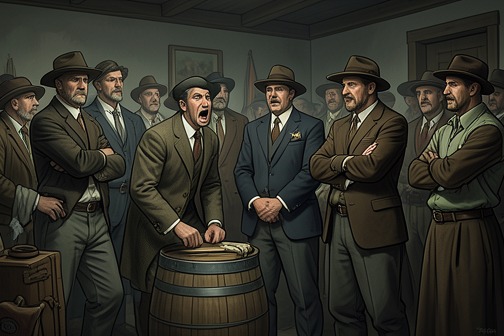
The [Battle of Gallatin](entity:event-recall-event-battle-of-gallatin-c487242f6ac1) was an election-day brawl in [Gallatin](entity:location-recall-location-gallatin-9009bab96778), [Missouri](entity:location-recall-location-f321c7abc52b), on August 6, 1838. A dispute over whether Mormon residents could vote escalated into a fight, and the Mormons present drove off their opponents. Their immediate success proved costly: local anger hardened into threats of retaliation, and the confrontation became an early turning point in the mounting violence against Mormons in [Daviess County](entity:location-recall-location-daviess-county-139df724fd7b).
## Background and Election-Day Dispute
Missouri had designated sparsely populated [Caldwell County](entity:location-recall-location-caldwell-county-5e58046b4450) as a place for Mormon settlement in 1836, hoping to reduce conflict by separating the Saints from less welcoming neighboring communities. Many Mormons moved there, and by 1838 they had acquired about 250,000 acres in the county and established [Far West](entity:location-recall-location-far-west-4b90040755e8). For a time, this relocation seemed to ease tensions. But Mormon settlement spread across the county line into Daviess County, where new communities provoked renewed hostility.
On August 6, 1838, Election Day, a Whig candidate for the state legislature, William Peniston, addressed a crowd from a barrel in Gallatin, the Daviess County seat. He denounced Mormons, while another local man argued that they should not have the right to vote, invoking a racist comparison. The remarks made the polling place a test of whether the Mormon residents there would be permitted to exercise their political rights.
## The Fight at Gallatin
About thirty Mormons were present. After the anti-Mormon speeches, a drunk local man attacked Samuel Brown, a small Mormon shoemaker. Other Mormons came to Brown’s aid, and the dispute became a brawl involving clubs, rocks, whips, and knives. Despite being heavily outnumbered, the Mormons overcame their opponents and drove them away.
The outcome was a Pyrrhic victory. Rather than settling the dispute, the Mormons’ resistance angered Gallatin’s residents, who vowed to retaliate. The fight therefore marked both a defense against an immediate attempt to exclude Mormon voters and a new escalation in the conflict between Mormon settlers and their neighbors.
## Retaliation and Wider Conflict
Over the following two months, Missourians carried out a campaign of harassment and violence against Mormon residents of Daviess County, forcing most from their homes. The Battle of Gallatin did not by itself cause the broader conflict: tensions had already been growing as Mormon settlement expanded beyond Caldwell County. But the threats made after the brawl were followed by sustained attacks, linking the election-day confrontation to the displacement that followed.
On October 14, in Far West, [Joseph Smith](entity:character-recall-character-joseph-smith-550057e1cec3) assembled several hundred followers and urged them to fight back after the attacks. His appeal followed months of pressure and the expulsion of Mormons from Daviess County. In this chronology, Gallatin stands as a compressed episode in a larger struggle over land, political participation, and the ability of Mormon communities to live without attack.
Event 15
1838 Missouri Mormon War
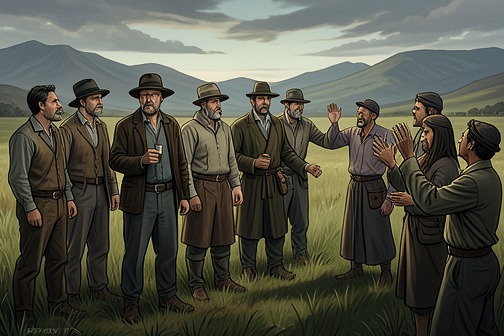
The [1838 Missouri Mormon War](entity:event-recall-event-1838-8ec3dc1be0a5) was a violent confrontation between Latter-day Saints and their [Missouri](entity:location-recall-location-f321c7abc52b) neighbors, rooted in disputes over settlement, political power, and religious authority. After years in which [Joseph Smith](entity:character-recall-character-joseph-smith-550057e1cec3) forbade retaliation, violence in [Daviess County](entity:location-recall-location-daviess-county-139df724fd7b) and his call for the Saints to fight back helped turn mounting hostility into open conflict. The war ended not with a negotiated settlement but with the Saints’ surrender, the imprisonment of Joseph and other leaders, and the community’s enforced departure from Missouri.
## Settlement and Rising Tension
The crisis developed against the background of a rapidly expanding Mormon presence. In 1836, the Missouri legislature designated sparsely populated [Caldwell County](entity:location-recall-location-caldwell-county-5e58046b4450) for Mormon settlement, hoping that concentrating the Saints there would prevent bloodshed. Most Mormons in the state moved into the county, where they eventually purchased about 250,000 acres and built [Far West](entity:location-recall-location-far-west-4b90040755e8). By 1838, roughly ten thousand Saints lived in Missouri. The apparent compromise of a designated settlement did not last: Mormons crossed into neighboring Daviess County and began establishing new communities there.
The newcomers and established residents differed in both politics and social organization. Many Mormon immigrants came from northeastern states and favored abolition, while many Missourians had southern roots and owned enslaved people. Local resentment also grew from the Saints’ close-knit life, their belief that [God](entity:character-recall-character-god-28f937b98b12) had chosen them, and their conviction that northwestern Missouri was their divinely appointed Zion. Church funds went toward land purchases; Mormons often traded with other Saints, voted as a bloc under Joseph Smith’s direction, and seemed poised to gain regional political influence. Their neighbors saw not simply a growing religious community, but one claiming a divine right to settle and govern the land.
Earlier violence had already shaped this atmosphere. In 1833, after civic protests failed to halt Mormon settlement in [Jackson County](entity:location-recall-location-jackson-county-d93162019e26), an armed mob attacked Saints, destroyed a printing office, and compelled leaders to promise to leave. Later that year, vigilantes drove about 1,200 Mormons from their homes. Joseph Smith deplored violence and for nearly five years forbade the Saints to retaliate, even as hostility continued. By the summer and fall of 1838, however, the growing population and repeated clashes had brought the conflict to a breaking point.
## [Gallatin](entity:location-recall-location-gallatin-9009bab96778) and the Turn to Retaliation
The immediate escalation began on August 6, Election Day in Missouri, in Gallatin, the seat of Daviess County. William Peniston, a Whig candidate for the state legislature, addressed a crowd from a barrel and denounced the Mormons. Another resident argued that they should not be allowed to vote. The dispute became physical when a drunken Missourian assaulted Samuel Brown, a small Mormon shoemaker. Saints intervened, and a fight followed in which both sides used clubs, rocks, whips, and knives. Although the outnumbered Mormons drove their opponents away, leaving many injured, the result was a reprisal threat rather than a resolution.
Over the next two months, harassment and violence pushed most Mormon residents out of Daviess County. On October 14, Joseph Smith gathered several hundred followers in Far West and urged them to resist further attacks. The Saints had appealed to civil authorities without obtaining protection, and Smith’s appeal marked a decisive departure from his earlier restraint. His followers then raided non-Mormon towns, taking food, livestock, and other property, and burned about fifty homes. Missourians responded with counterattacks, including the destruction of Mormon cabins. In a skirmish eleven days after Smith’s address, three Saints and one non-Mormon were killed.
The violence was then magnified by a false report sent to Governor [Lilburn Boggs](entity:character-recall-character-lilburn-boggs-b086f9c263b4), claiming that the Saints had killed fifty Missourians. Boggs, elected in 1836 on an anti-Mormon platform, ordered the [Missouri Militia](entity:organization-recall-organization-c4d3e45501b6) to treat Mormons as enemies and to exterminate or drive them from the state if necessary. The order transformed a local struggle into a campaign backed by state power and made the Saints’ presence in Missouri increasingly untenable.
## Haun’s Mill and the Surrender
On October 30, 1838, three companies of the Missouri Militia under Colonel Thomas Jennings attacked the Mormon settlement at Haun’s Mill. The residents were caught by surprise. Some fled into nearby thickets; others sought shelter in the settlement’s blacksmith shop. The troops continued firing despite an attempt by the Mormon commander to surrender. Eighteen Saints were killed in and around the shop. The massacre became a lasting part of Latter-day Saint memory, and reports of it circulated in Missouri newspapers.
Joseph Smith was not at Haun’s Mill. He was sixteen miles away, overseeing the defense of Far West, which was surrounded by about ten thousand Missouri troops. He learned of the massacre the following night and concluded that a full-scale war would likely destroy him and his followers. He sent five Mormons to negotiate. The militia general set severe terms: Joseph and six other leaders had to be delivered to face treason charges; the Saints had to compensate Missourians for property taken or destroyed, surrender their weapons, and leave Missouri.
Smith accepted the terms, presenting his surrender as a sacrifice intended to save the Church and its members. The Saints surrendered on November 1. Joseph, his brother [Hyrum Smith](entity:character-recall-character-hyrum-smith-443af1454b6c), and five other leaders were taken into custody, hastily court-martialed, and found guilty of treason. General [Alexander Doniphan](entity:character-recall-character-alexander-doniphan-e790df45cc11) was ordered to take them to the public square at Far West for execution the next morning. He refused, arguing that executing American civilians after a military court-martial would be murder. His defiance stopped the planned execution and spared Joseph’s life at that moment.
## Expulsion and Aftermath
Doniphan’s intervention did not undo the surrender’s other conditions. Once disarmed, the Saints were vulnerable to further retaliation: their belongings were looted, cabins were dismantled or burned, livestock was shot, and men were beaten. Rapes of women and girls were reported. The community was given only until the spring of 1839 to leave the state. During the winter, the Saints endured hunger and severe cold while Joseph and other leaders remained jailed on charges including treason and murder.
The massacre and the prolonged detention of the Mormon leaders gradually became political liabilities for Missouri officials. Newspaper accounts prompted calls for an investigation, and sympathetic articles appeared across the region. Officials grew reluctant to put the accused on trial, fearing that the Saints might be acquitted. Yet the shift in public opinion did not restore the Mormons’ homes or secure their continued residence in Missouri. The war’s immediate outcome was expulsion: the Saints had been disarmed, their leaders arrested, and their settlement dismantled under threat of further violence.
The conflict exposed the competing claims that had driven it. Mormon assertions of chosen status, divinely directed settlement, and collective religious identity collided with local fears of political domination and with the state’s use of military force. Joseph Smith’s movement from forbidding retaliation to calling for resistance, and then accepting surrender after Haun’s Mill, gives the episode its central reversal. The Saints’ forced departure did not resolve the conflict between religious community and civil authority; it carried that struggle into the next stage of their history.
Event 16
Haun's Mill Massacre
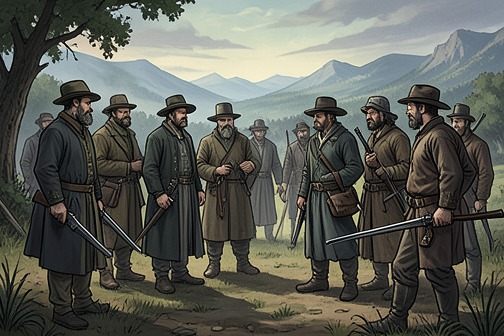
The [Haun's Mill Massacre](entity:event-recall-event-37b3ceed264d) was a surprise attack on a Mormon settlement in [Missouri](entity:location-recall-location-f321c7abc52b) on October 30, 1838, in which eighteen Saints were killed. Its significance extended beyond the immediate loss of life: the attack helped force [Joseph Smith](entity:character-recall-character-joseph-smith-550057e1cec3) to abandon armed resistance, and its memory became part of a religious identity built around persecution, endurance, and chosenness.
## Conflict before the attack
The massacre took place amid escalating conflict between Mormons and their neighbors. After an inflammatory report falsely claimed that Saints had killed fifty Missourians, Governor [Lilburn Boggs](entity:character-recall-character-lilburn-boggs-b086f9c263b4) ordered that Mormons be treated as enemies and expelled or exterminated if necessary. Joseph Smith had called for resistance, and members of his community had raided Gentile towns, taking food, livestock, and other property and burning about fifty homes. Missourians retaliated by destroying Mormon cabins. A skirmish left three Saints and one Gentile dead, while the false report helped intensify the crisis.
By late October, the [Missouri Militia](entity:organization-recall-organization-c4d3e45501b6) was acting against Mormon settlements. On the afternoon of October 30, three companies under Colonel Thomas Jennings approached [Haun's Mill](entity:location-recall-location-haun-s-mill-16e5cab83269). About twenty-five Mormon families were working in the fields when approximately 240 troops appeared from the surrounding woods and opened fire. The scale of the force made the settlement's position immediately precarious: its commander recognized that the community was lightly armed and could not match the attackers.
## The attack at Haun's Mill
The Mormon commander waved his hat and called for surrender. The militia did not stop firing. Residents scattered into nearby thickets, while a group of three boys and fifteen men sought shelter in the settlement's blacksmith shop. Its log walls had wide gaps between them, leaving those inside exposed. The attackers fired through the openings and then approached the shop, continuing to shoot at close range. The sequence turned the building meant as refuge into the place where much of the killing occurred.
After the firing ceased, the militia entered the shop and found ten-year-old [Sardius Smith](entity:character-recall-character-sardius-smith-5fefb2ecf6e3) beneath the bellows. A militiaman, William Reynolds, killed him despite his youth. Sardius's younger brother had been shot through the hip but survived by remaining still among the dead. Eighteen Saints were killed in and around the blacksmith shop. The attack thus struck both the community's adult defenders and its children, and its victims included people who had sought shelter rather than continued the fight.
## Joseph Smith and the surrender
Joseph Smith was not at Haun's Mill when the attack took place. He was sixteen miles away at [Far West](entity:location-recall-location-far-west-4b90040755e8), overseeing the settlement's defense while roughly ten thousand Missouri troops surrounded it. He learned of the massacre the following night and fell into a deep depression. In the months before the attack, he had shifted between fighting back and seeking a peaceful compromise; the massacre changed the balance of that decision.
Concluding that a full-scale war would lead to the destruction of himself and his followers, Joseph sent five Mormons to negotiate. He instructed them to plead for peace. The Missouri general demanded that Joseph and six other leaders be handed over for treason charges, that the Mormons compensate Missourians for damaged or plundered property, surrender their weapons, and leave Missouri. Joseph accepted these harsh terms. He told the faithful at Far West that he would offer himself as a sacrifice to save their lives and the Church, presenting his surrender as a means of protecting the community from further loss.
## Memory and historical significance
The massacre became a defining episode in the church's account of its experiences in Missouri. Persecution came to function as a test of faith and a mark of chosenness; the accumulated memory of trials was not simply a record of suffering but a resource through which members understood their collective identity. Haun's Mill gave that memory a concrete and devastating form. More than 160 years later, Mormons still spoke of the massacre with indignation.
That memory also had consequences beyond commemoration. During the 1857 crisis over the approaching federal army, church leaders and speakers recalled the killings and other episodes of violence and expulsion in Missouri and [Illinois](entity:location-recall-location-17df7ac1968d) to strengthen resistance to outside authority. The past was retold as a warning that the Saints would not be driven out again. In this way, Haun's Mill belonged both to the history of a particular attack and to a recurring narrative through which later generations interpreted danger, solidarity, and the community's right to endure.
Event 17
1838—1839年摩门教徒被逐出密苏里州
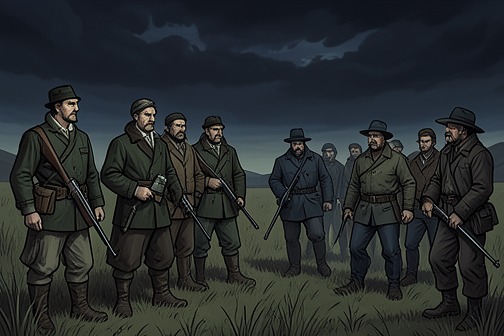
The 1838–1839 expulsion from [Missouri](entity:location-recall-location-f321c7abc52b) was a forced removal that turned an escalating political and religious conflict into a mass flight. After the [Haun's Mill Massacre](entity:event-recall-event-37b3ceed264d) and the encirclement of [Far West](entity:location-recall-location-far-west-4b90040755e8), the Saints faced demands to surrender their leaders, give up their weapons, pay for property losses, and abandon Missouri. [Joseph Smith](entity:character-recall-character-joseph-smith-550057e1cec3) accepted those terms to avert further immediate danger, but the surrender did not protect the community from plunder and abuse. The expulsion became part of the Saints’ enduring memory of persecution and helped shape their identity as a people whose survival depended on moving together.
## Causes and Escalation
The confrontation grew from the rapid arrival of Mormon settlers in [Jackson County](entity:location-recall-location-jackson-county-d93162019e26) and their intention to establish a religious community in what they understood as a divinely appointed place. Many newcomers came from northeastern states and favored abolition, while many Missouri residents had southern roots and owned enslaved people. Local suspicion was also fed by the Saints’ communal boundaries and political organization: they purchased land with church funds, favored trading with fellow members, voted as a bloc under Joseph Smith’s direction, and grew numerous enough to appear capable of dominating regional politics.
Religious claims sharpened those tensions. The Saints regarded themselves as [God](entity:character-recall-character-god-28f937b98b12)’s chosen people with a divine inheritance in Missouri; some residents interpreted that claim, alongside language dividing the righteous from their enemies, as a threat. Joseph Smith’s teaching that people could choose between the Lord’s side and wickedness left little room for sympathy toward those who rejected the Saints’ religious claims. In 1831, a revelation described Missouri as the Saints’ inheritance and their enemies’ land. To neighbors already alarmed by settlement and political change, such language could sound like an assertion of territorial entitlement rather than a private matter of faith.
By 1838, conflict had become increasingly violent. Joseph Smith was at Far West while ten thousand Missouri troops surrounded the town when the Haun's Mill Massacre took place. Eighteen Saints were killed in and around a blacksmith shop. The massacre, and the prospect of a wider war against a far larger force, altered Joseph’s calculations. Rather than continue an armed confrontation that he believed could end in the destruction of his followers, he sent five Mormon representatives to seek peace from the opposing side.
## Surrender and Forced Departure
The [Missouri Militia](entity:organization-recall-organization-c4d3e45501b6)’s terms made clear that peace would come at the cost of the Saints’ home and political independence. They were told to hand over Joseph Smith and six other leaders to face treason charges, compensate Missourians for property that had been plundered or destroyed, surrender their weapons, and leave Missouri altogether. The conditions were severe, but Joseph accepted them, presenting his own surrender as a way to save the lives of the faithful and preserve the church.
On November 1, the Saints surrendered. Joseph, his brother [Hyrum Smith](entity:character-recall-character-hyrum-smith-443af1454b6c), and five other leaders were taken into custody, hastily court-martialed, and found guilty of treason, a capital crime. Missouri’s commanding general ordered [Alexander Doniphan](entity:character-recall-character-alexander-doniphan-e790df45cc11) to take the prisoners into Far West’s public square and execute them the following morning. Doniphan refused. He argued that the prisoners were American citizens and that a military court could not lawfully condemn civilians to summary execution; he warned that he would hold his superior accountable for murder. His refusal halted the planned execution and spared Joseph’s life at that moment.
That intervention did not undo the other surrender conditions. Disarmed and exposed to hostile residents, the Saints suffered further losses: possessions were plundered, cabins dismantled or burned, livestock killed, and men beaten. Reports of sexual assaults against women and girls added to the community’s fear. The Saints were also given only a few months, until the spring of 1839, to leave the state. The result was not simply the relinquishment of a disputed settlement. It was a coerced departure under conditions in which the community’s property, safety, and continued presence in Missouri had become precarious.
## Winter, Imprisonment, and Escape
The winter after the surrender brought famine and severe cold for the Saints as they prepared to leave. Joseph remained imprisoned with nine other Mormon leaders, indicted on charges of treason and murder. From jail he condemned the killings at [Haun's Mill](entity:location-recall-location-haun-s-mill-16e5cab83269), Governor [Lilburn Boggs](entity:character-recall-character-lilburn-boggs-b086f9c263b4)’s extermination order, and the proceedings of the state legislature. His imprisonment gave the expulsion a further political dimension: while the community faced removal, its leading figures remained in the hands of the authorities who had imposed the surrender.
Public opinion shifted as accounts of the Haun's Mill Massacre appeared in Missouri newspapers and calls for an investigation grew. Articles sympathetic to the Mormons circulated, and holding Joseph and the other leaders without trial became an increasing embarrassment to state and local officials. Rather than risk a trial that might end in acquittal, influential people encouraged the sheriff guarding the prisoners to accept an $800 bribe, get drunk, and fall asleep. On April 16, 1839, Joseph and his nine cellmates escaped during the night and traveled cross-country to rejoin the Saints. Most of the community had already completed its exodus and reached [Illinois](entity:location-recall-location-17df7ac1968d).
## Exodus and Historical Significance
The departure was remembered not merely as a change of residence but as a collective ordeal. A later account describes the Saints as leaving in bitterness and hope, their experiences of persecution and loss binding them together. The image of each wagon train as a renewed flight from Egypt captures how the community interpreted migration: leaving Missouri was both an imposed separation from home and a shared passage toward safety. The account also emphasizes that the group’s strength lay in cohesion and practical organization under [Brigham Young](entity:character-recall-character-brigham-young-bf8a15a5d308), who became a capable leader in the migration west.
For Joseph Smith, escape from Missouri was followed by a new beginning in Illinois. About a month after leaving jail, he surveyed a site beside the [Mississippi River](entity:location-recall-location-44b9f53a3db0) in [Hancock County](entity:location-recall-location-hancock-county-ead6e613ad9f) and decided to build the Saints’ next city there. The expulsion therefore had consequences beyond the loss of their Missouri settlement: it carried the community across a state line and into the founding of [Nauvoo](entity:location-recall-location-nauvoo-ce60de713cb4). But the memory of forced surrender, imprisonment, and flight remained central to the story the Saints told about themselves, making the Missouri expulsion a defining expression of the conflict between religious claims, local political power, and state authority.
Event 18
Founding of Nauvoo

The founding of [Nauvoo](entity:location-recall-location-nauvoo-ce60de713cb4) transformed a nearly empty, swampy bend of the [Mississippi River](entity:location-recall-location-44b9f53a3db0) into a thriving city and the center of an ambitious Mormon theocracy. Under [Joseph Smith](entity:character-recall-character-joseph-smith-550057e1cec3), the settlement acquired unusual civic powers, developed a disciplined militia, and became the setting for major theological innovations. Its rapid rise also concentrated religious, political, and military authority in one place, leaving a legacy that extended beyond the city’s founding and its later abandonment.
## Site and settlement
About a month after breaking out of jail in [Missouri](entity:location-recall-location-f321c7abc52b), Joseph Smith surveyed the eastern bank of the Mississippi at [Hancock County, Illinois](entity:location-recall-location-hancock-county-illin-36fbf896a532), and chose the site for a capital of the [Kingdom of God on earth](entity:concept-recall-concept-kingdom-of-god-on-ear-f9733f4dd139). The low promontory was then a malarial swamp, so wet that foot travel was difficult and ox teams could not pass. Its advantages were practical: the land was almost uninhabited, and its owner was willing to sell acreage to the Saints on credit.
The settlers began building with characteristic industry. Within five years, more than fifteen thousand people lived in and around Nauvoo—about ten times its present-day population at the time of the book’s account. It became the second-largest municipality in [Illinois](entity:location-recall-location-17df7ac1968d), a city created from almost nothing that rivaled Chicago. The speed and scale of the transformation established Nauvoo not merely as a refuge after expulsion, but as a visible demonstration of the community’s capacity to organize and build.
## Charter and concentrated authority
Nauvoo’s political character was shaped by a highly unusual charter that the Illinois General Assembly passed in December 1840. Illinois was eager to attract industrious settlers, and sympathy for the Latter-day Saints remained strong after their expulsion from Missouri. The charter granted the city sovereign rights and powers exceptional in Illinois and across the nation. The unintended result was to make Joseph, as the city’s head, the effective ruler of an autonomous city-state.
Joseph’s authority was not only civic or religious. He commanded the [Nauvoo Legion](entity:organization-recall-organization-f1a3c62f0865), a well-armed and rigorously disciplined militia said to number nearly half as many men as the entire American Army at the time. Seeking a still larger force, he petitioned Congress to authorize a one-hundred-thousand-man army under his personal control; Congress declined. The scale of the request nevertheless shows how the city’s special political standing encouraged ambitions that reached far beyond its borders.
In January 1844, Joseph announced his candidacy for president of the United States. He treated the campaign seriously, sending 586 missionaries—including ten members of the [Quorum of the Twelve Apostles](entity:organization-recall-organization-4e7fdd30c24d)—to all twenty-six states and Wisconsin Territory to seek support. Nauvoo thus served as more than a local seat of power: it became the launching point for an effort to extend Joseph’s influence nationally.
## Religious innovation and concealed practice
Nauvoo was also the setting for a concentrated period of theological development. Joseph introduced vicarious baptism for the dead, allowing living members to be baptized on behalf of deceased ancestors. He established the temple endowment ceremony and taught that [God](entity:character-recall-character-god-28f937b98b12) had once been a man and that human beings could become gods. These teachings expanded the religious system being built around the city and gave its temple-centered life an increasingly distinctive form.
[Plural marriage](entity:rule-recall-rule-plural-marriage-ac4e0821346e) occupied a different and more guarded place in this period. Joseph had continued taking plural wives in [Ohio](entity:location-recall-location-4c66c89ead05) and Missouri, and did so more frequently in Nauvoo in the early 1840s, while concealing the practice from non-Mormons and all but a select circle of followers. On July 12, 1843, he formally codified the principle in a revelation. Unlike the other theological developments described alongside it, the revelation remained secret and was not acknowledged until 1852, eight years after his death. Nauvoo’s religious history therefore joined public doctrinal innovation to a private practice that leaders withheld from most of the community and the outside world.
## Departure and institutional legacy
The settlement’s growth did not prevent the Saints from leaving it. In February 1846, the first wagon trains departed Nauvoo amid violence and pressure in Illinois. At [Sugar Creek](entity:location-recall-location-sugar-creek-851d73f53b65), [Iowa](entity:location-recall-location-c9282a2c542a), where the emigrants regrouped before continuing west, church leaders openly shared the previously concealed doctrine of plural marriage with the rank and file. The disclosure marked a change in what members were told as the community moved out of the city and toward the [Rocky Mountains](entity:location-recall-location-110ee6a4c8cd).
The hardships of the exodus, following violence in Missouri and Illinois, strengthened the commitment of those who completed the journey. The survivors formed a close-knit community whose loyalty to [Brigham Young](entity:character-recall-character-brigham-young-bf8a15a5d308) was described as unconditional. After Joseph’s murder and the acquittal of the men tried for it, Brigham called for God and the Saints to avenge the blood of church leaders; church authorities made an [Oath of Vengeance](entity:rule-recall-rule-oath-of-vengeance-2244634fb525) part of the temple endowment ceremony. Nauvoo’s founding had gathered civic, military, and religious power in one place. Its later dispersal did not erase that institutional inheritance: the community carried its doctrines, rituals, and leadership structures westward.
Event 19
Joseph Smith's 1844 Presidential Campaign
[Joseph Smith](entity:character-recall-character-joseph-smith-550057e1cec3)’s 1844 presidential campaign was an attempt to carry the Latter-day Saints’ struggle for protection from local persecution onto the national stage. Announced in January 1844, it was more than a symbolic candidacy: Smith sent hundreds of missionaries to canvass the country, treating the race as a serious means of extending his influence and, possibly, securing protection for his followers. The campaign emerged from [Nauvoo](entity:location-recall-location-nauvoo-ce60de713cb4), a city where religious authority and civic power were already unusually concentrated in Smith’s hands.
## Nauvoo and the political setting
Nauvoo had grown from a swampy settlement on the [Mississippi River](entity:location-recall-location-44b9f53a3db0) into a city of more than fifteen thousand people within five years. Its special charter, passed by the [Illinois](entity:location-recall-location-17df7ac1968d) General Assembly in December 1840, gave it sovereign powers unusual for a municipality. Smith stood at the head of this theocratic principality, was formally styled King, Priest, and Ruler over Israel on Earth, and commanded the well-armed [Nauvoo Legion](entity:organization-recall-organization-f1a3c62f0865). The scale of the city and the authority built into its charter formed the immediate political setting for his national ambitions.
The campaign also followed years of conflict between the Saints and their neighbors. In [Jackson County](entity:location-recall-location-jackson-county-d93162019e26), [Missouri](entity:location-recall-location-f321c7abc52b), Mormon settlers claimed a divine right to establish Zion, while their numbers, collective voting, separate commerce, and abolitionist sympathies deepened local suspicions. Their religious worldview sharpened the boundary: existence was presented as a struggle between the [Church of the Lamb of God](entity:organization-recall-organization-94d344a59e89) and the church of the devil, and those who rejected the Saints’ understanding of [God](entity:character-recall-character-god-28f937b98b12)’s plan were treated as having chosen the opposing side. Against that background, political protection was not an abstract concern but part of a continuing dispute over whether the Saints could worship and settle without being driven out.
## The candidacy and its national reach
In January 1844, Smith announced that he would run for president of the United States. He then dispatched 586 of his most capable and persuasive missionaries to seek support in all twenty-six states and Wisconsin Territory. Ten members of the [Quorum of the Twelve Apostles](entity:organization-recall-organization-4e7fdd30c24d) were among them. The breadth of this effort made the campaign an organized national undertaking, extending the Saints’ religious network into the work of electoral persuasion.
The candidacy was improbable by conventional political measures. Historians judged Smith’s chances of winning the November election to be extremely slight, but the evidence does not establish whether he shared that assessment. He nevertheless took the campaign seriously, devoting experienced personnel and substantial reach to it. His earlier success in building a church and a powerful city may have made a presidential bid seem less remote to him than it appeared to outside observers.
## Protection, power, and the campaign’s meaning
One explanation offered for Smith’s decision to run is that he had concluded that only the presidency could secure state protection for the Saints. He had repeatedly tried, without success, to persuade elected officials that government had a moral and legal obligation to shield them from violent mobs. On this reading, the campaign was a response to the failure of appeals made from outside government: Smith sought the office from which he believed protection might finally be imposed.
That appeal carried a deep contradiction. Smith revered the [United States Constitution](entity:object-recall-object-e66fc2354196) as divinely inspired and complained that political leaders failed to protect the Saints’ freedom of worship. Yet his conduct also showed little regard for the religious views of non-Mormons, raising the question of how he might have treated the constitutional rights of other faiths if he had gained national power. The campaign thus joined a genuine demand for protection to an expansive claim of religious and political authority. Its significance lies not in any demonstrated prospect of electoral victory, but in how plainly it made that tension national.
Event 20
利尔本·博格斯遇刺未遂
The attempted assassination of [Lilburn Boggs](entity:character-recall-character-lilburn-boggs-b086f9c263b4) took place on May 6, 1842, in [Independence](entity:location-recall-location-independence-1edfddce32d5), [Missouri](entity:location-recall-location-f321c7abc52b), after [Joseph Smith](entity:character-recall-character-joseph-smith-550057e1cec3) had publicly prophesied that the former governor would die violently within a year. Boggs survived the attack, but the suspected assailant, [Porter Rockwell](entity:character-recall-character-porter-rockwell-3a0a3905b0f1), escaped arrest. The episode brought together a prophet’s words, the violence of the Missouri conflict, and a community’s belief that prophecy could impose duties on its followers—even when no direct order had been given.
## Background and Prophecy
Boggs remained an adversary of the Mormons after they were driven from Missouri. Although Joseph Smith had escaped from jail, criminal charges against him were still pending in the state, and he was considered a fugitive. A bounty had been placed on him. On at least two occasions, Missouri sheriffs traveled to [Illinois](entity:location-recall-location-17df7ac1968d) with writs for his arrest.
In May 1841, a sheriff’s posse surprised Joseph outside [Nauvoo](entity:location-recall-location-nauvoo-ce60de713cb4) and arrested him. The posse nearly carried him across the state border before he obtained his release through a writ of habeas corpus. The close call intensified his anger at the continuing threat of extradition. Soon afterward, in a public speech, he predicted that Boggs, whom the Saints despised as their nemesis, would “die by violent hands within one year.” The prophecy preceded the attack by about a year and gave the shooting an immediate religious and political context.
## The Attack in Independence
On the evening of May 6, 1842, Boggs was reading a newspaper in the study of his home in Independence. A gunman outside fired through a window, striking him four times. His injuries were severe enough that those around him expected him to die, and newspapers across the country reported his death. The shooting was therefore understood not only as an assault on a former governor but also as a possible fulfillment of Joseph’s prediction.
The first tangible clue was the handgun found outside the study, discarded in a puddle. Investigators traced it to a local store, where it had recently been stolen. The storekeeper recalled a hired worker associated with Ward who had come to inspect the pistol shortly before it went missing. That worker was Porter Rockwell, a skilled horseman from Nauvoo who had arrived in Independence a couple of months before the shooting. After Boggs was attacked, Rockwell quietly left town.
## Suspicion and Escape
The country’s newspapers often speculated that a Mormon had tried to fulfill Joseph’s prophecy. The account identifies Rockwell as almost certainly the would-be assassin, but the case remained circumstantial: the stolen pistol, his connection to its theft, his presence in Independence, and his departure after the shooting pointed toward him without resulting in an arrest. Rockwell eluded capture, and neither he nor any other Saint was ever brought to justice for the attack.
Rockwell’s reputation gave the suspicion particular force. He was fiercely devoted to Joseph and feared little; he was already becoming known for willingness to shed the blood of people believed to have wronged the church. Admirers would call him the “[Destroying Angel](entity:expression-recall-expression-destroying-angel-940866ffbe76)” and the “Mormon Samson,” names that made him a figure of religious legend as well as a suspected gunman. The book nevertheless distinguishes suspicion from proof and leaves open whether Joseph had ordered the attack: he may not have done so. Its account instead emphasizes the belief among the faithful that Saints had a sacred duty to help bring a prophet’s predictions to pass when the opportunity arose. In that understanding, a prophecy could be treated as a summons without anyone having to issue an explicit command.
## Survival and Significance
Reports of Boggs’s death proved premature. He recovered from his serious injuries, so the prophecy was not fulfilled as the newspapers initially claimed. Yet the shooting remained a striking convergence of prediction, violence, and suspicion: it appeared to validate Joseph’s words while also attaching a violent act to a follower whose actions may not have been formally directed by the prophet.
The episode unfolded while Nauvoo was expanding and new converts were arriving from places as distant as England and Scandinavia. Against that growth, the attack exposed the unresolved hostility carried over from Missouri and the perilous overlap between religious authority and political conflict. Its central ambiguity is consequential: Joseph had foretold Boggs’s violent death, Rockwell was widely suspected of trying to bring it about, and no Saint was prosecuted. The narrative presents that gap between prophecy, perceived religious duty, and demonstrable command as part of the story, rather than resolving it into proof of an order.
Event 21
Joseph Smith's 1843 Revelation on Plural Marriage
[Joseph Smith's 1843 Revelation on Plural Marriage](entity:event-recall-event-1843-811d60e78e32) was the formal written articulation of a doctrine that reshaped his marriage and intensified disagreements within his inner circle. Recorded on July 12, 1843, and later known as [Section 132 of the Doctrine and Covenants](entity:object-recall-object-132-176489db1ec1), it presented plural marriage as divinely authorized while placing a direct demand on [Emma Smith](entity:character-recall-character-emma-smith-35241e23ec1b) to accept Joseph's marriages. Its immediate purpose and effect were bound up with that conflict: the text did not win Emma's assent, and it did not stop Joseph from taking additional wives.
## Secrecy and the [Nauvoo](entity:location-recall-location-nauvoo-ce60de713cb4) context
In Nauvoo, [Joseph Smith](entity:character-recall-character-joseph-smith-550057e1cec3) had kept his plural marriages secret while waiting for what he regarded as the proper time to disclose the principle. The revelation was different from other doctrinal developments of the period: although formally recorded in 1843, it was kept secret and was not acknowledged until 1852, eight years after Joseph's death. That interval separated the document's creation from its public recognition and left the teaching circulating among a limited circle before it became an acknowledged church doctrine.
The revelation emerged during a period of major theological innovation. In Nauvoo, Joseph had introduced proxy baptism for the dead and the temple endowment, and taught that [God](entity:character-recall-character-god-28f937b98b12) had once been a man and that human beings could become gods. The plural-marriage revelation belonged to this same burst of religious teaching, but its secrecy and its direct implications for marriage made it especially contentious. It did not simply state an abstract principle: it addressed the household of Joseph and Emma by name and framed obedience to the principle as a matter of divine command.
That teaching accompanied a period in which Joseph married about forty women between 1840 and 1844. The revelation therefore came after plural marriages were already taking place, rather than initiating them from the beginning. Some women were shocked by what was asked of them; among them was fourteen-year-old [Helen Mar Kimball](entity:character-recall-character-helen-mar-kimball-10771af4798b), who later described being led to believe that her family's salvation depended on her agreement. Joseph married Helen in May 1843, two months before the revelation was recorded. [Lucy Walker](entity:character-recall-character-lucy-walker-08e57f225845) also married Joseph that May, after a family bereavement and a period in which Joseph had taken her and several siblings into his household. These marriages show the circumstances surrounding the document, while the text supplied a formal religious rationale for the practice.
## Emma Smith and the making of the revelation
Emma had been married to Joseph since 1827 and opposed his plural marriages. By 1844, people in Joseph's inner circle had learned of his plural relationships, and some had seen the revelation before it was publicly acknowledged. Emma's opposition was not peripheral to the text's formation. The account describes the revelation as having been prompted, at least in its original intent, by Joseph's wish to persuade her to accept his plural wives while forbidding her from seeking sexual relationships outside their marriage.
On the morning of July 12, [Hyrum Smith](entity:character-recall-character-hyrum-smith-443af1454b6c) urged Joseph to write down the revelation, believing he could use it to persuade Emma. Joseph agreed, and his secretary recorded the text. Its repeated naming of Emma made the personal stakes explicit: it instructed her to remain with Joseph and threatened divine destruction if she refused the commandment. The document thus joined a general rule about plural marriage to a particular demand on the first wife, presenting her compliance as an obligation rather than a matter for mutual agreement.
After Joseph finished dictating, Hyrum delivered the ten-page document to Emma. She rejected it and remained unwilling to accept Joseph's marriages. Hyrum reported that she was bitter and angry, and that she did not believe the revelation. Her response did not alter Joseph's conduct: he continued taking wives, but made no further effort to secure her consent. The encounter exposed a central contradiction in the document's domestic authority. It claimed divine force over Emma while failing to persuade the person whose obedience it specifically sought.
## The doctrine's terms and unequal obligations
The revelation justified a man who married a virgin and then took another wife under the stated law, declaring that such marriages did not constitute adultery. It extended that logic even to a man with ten wives, treating them as given to him under the commandment. By contrast, it assigned a grave consequence to a wife who, after being married, was with another man. The text therefore established a sharply unequal system: a man's plurality of wives could be authorized, while a woman's sexual relationship with another man was condemned.
This difference was not incidental to the revelation's argument. Its claim of divine authorization depended on treating women as wives given to a man under the law, while placing the obligation to remain faithful on the woman. In Emma's case, the text demanded that she cleave to Joseph alone even as it defended his right to marry other women. Its language translated a disputed marital practice into a question of obedience to God, and made resistance appear not simply as disagreement with a husband but as refusal of a divine command.
## Reception and consequences
Emma's refusal did not end Joseph's plural marriages, and the revelation did not restore agreement within the household. It instead sharpened an existing divide between Joseph and those who opposed the doctrine. [William Law](entity:character-recall-character-william-law-fe257cd54054), a close friend of Joseph and his second counselor, supported Emma and urged Joseph in January 1844 to renounce the revelation. Joseph told Law that he could not withdraw a commandment he believed God had given him. Their disagreement over plural marriage strained their friendship, which was later severed amid further conflict over Joseph's conduct.
The document's immediate history is therefore one of contested authority: Joseph treated the principle as binding because he understood it to be divinely commanded; Emma rejected the text's demand; and Hyrum's attempt to mediate failed. Its later public acknowledgment in 1852 gave formal recognition to a revelation that had remained secret during Joseph's life. The episode is significant not only for establishing plural marriage as a religious principle, but also for showing how that principle was written into scripture through a private marital dispute—and how the document's claim of heavenly authority could not resolve the human opposition it was meant to overcome.
Event 22
Nauvoo Expositor Affair
The [Nauvoo Expositor Affair](entity:event-recall-event-0b066fa95037) was a confrontation over plural marriage, political authority, and freedom of the press that turned [William Law](entity:character-recall-character-william-law-fe257cd54054)’s opposition to [Joseph Smith](entity:character-recall-character-joseph-smith-550057e1cec3) into a public crisis. After Law established a church opposed to plural marriage, he used his own printing press to publish the [Nauvoo Expositor](entity:object-recall-object-606c76717cb3). Smith responded not by answering the paper in print but by ordering its destruction through [Nauvoo](entity:location-recall-location-nauvoo-ce60de713cb4)’s city government. The raid silenced the newspaper, but it helped transform a local dispute into a wider conflict over the power Smith exercised in Nauvoo.
## Background: A break within the church
William Law had been a longtime church member and a trusted counselor to Joseph Smith. His opposition to plural marriage grew alongside his concern for [Emma Smith](entity:character-recall-character-emma-smith-35241e23ec1b), who rejected Joseph’s revelation on the subject. Law tried to persuade Joseph to withdraw the doctrine, but Joseph maintained that he had been commanded by [God](entity:character-recall-character-god-28f937b98b12) to teach it. The dispute became personal as well as doctrinal when Joseph made improper proposals to Law’s wife, Jane. In April 1844, Law demanded that Joseph publicly acknowledge his conduct and stop what Law considered religious abuses.
Joseph excommunicated Law. Law, in turn, called Joseph a fallen prophet and, on May 12, established the [Reformed Mormon Church](entity:organization-recall-organization-64074f24d313), which did not sanction plural marriage. His aim was reform rather than simply denunciation: he sought to create an institution organized like the main church but freed from the practice he opposed. That distinction made him a serious challenger. He had standing as a former insider, a public alternative to Joseph’s authority, and the resources to make his criticism visible.
## Publication and destruction of the newspaper
Law’s wealth enabled him to buy a printing press. On June 7, 1844, the first and only issue of the Nauvoo Expositor appeared; one thousand copies were printed. Its lead editorial attacked Joseph’s leadership and the practice of plural marriage. The four-page paper also criticized Joseph’s mixing of church and state, his accumulation of political power, and his financial dealings. Its editors said that they intended to publish affidavits supporting their allegations, making the issue a beginning rather than a settled account of the dispute.
Many Nauvoo residents reacted angrily to the paper and its owners, while remaining devoted to Joseph. He saw the Expositor as a threat to his control of the church and called an emergency meeting of the city council. Acting as mayor, he declared the newspaper a public nuisance and ordered the city marshal to destroy its press and copies. The official rationale framed the paper as a danger to public order; the practical result was the suppression of a publication that had challenged the city’s most powerful leader.
On the evening of June 10, more than two hundred armed members of the [Nauvoo Legion](entity:organization-recall-organization-f1a3c62f0865) entered the Expositor offices. [Hyrum Smith](entity:character-recall-character-hyrum-smith-443af1454b6c) and Apostle [John Taylor](entity:character-recall-character-john-taylor-ddcbb9c70c78) led the group under orders from Joseph, the legion’s commander. They broke down the door with a sledgehammer, smashed the press, scattered its type, and burned the remains. The action was carried out by an armed force acting on a municipal order, not through a public rebuttal or a judgment against the newspaper in an independent court.
## Local power and a widening conflict
The publishers sought legal redress, charging Joseph and the others involved with crimes. But Nauvoo’s government and courts were under Joseph’s control, and everyone charged in connection with the destruction was exonerated, including Joseph. Law, fearing for his safety, had already fled the city. His Reformed Mormon Church dwindled and eventually disappeared. Thus the challenge failed as an institution inside Nauvoo even as the suppression of the paper drew attention to the powers that had defeated it.
The affair took place within the unusual political arrangement that had made Nauvoo a theocratic principality. A charter granted by the [Illinois](entity:location-recall-location-17df7ac1968d) General Assembly in December 1840 had given the city distinctive sovereign powers. Joseph headed its government and commanded the Nauvoo Legion, a large and disciplined militia. By 1844, conflict over those local powers was already building: non-Mormon residents were alarmed by the Saints’ coordinated voting, Joseph’s influence in state politics, and his apparent willingness to place religious rule above constitutional restraint. The destruction of the Expositor confirmed their fear that political authority in Nauvoo could be used to silence opposition.
The response beyond the city was swift and threatening. An editorial in nearby Warsaw called for armed resistance, urging residents to defend the publishers’ property rights. The affair therefore made the press destruction a flashpoint in an existing divide between the Saints and their non-Mormon neighbors. Smith had prevailed over Law within Nauvoo, but the same concentration of power that secured that local victory helped persuade outsiders that the city’s leadership posed a danger to regional peace and stability.
## Significance
The Nauvoo Expositor Affair brought competing claims of authority into direct collision. Joseph understood himself as divinely commissioned and had access to the machinery of municipal government and the Nauvoo Legion; Law relied on dissent within the church and the public circulation of a newspaper. Once Smith’s government ordered the press destroyed and then cleared those responsible, the dispute could no longer be understood as only a disagreement over marriage doctrine. It had become a test of whether a city’s leaders could invoke public order to suppress criticism of their own power.
The affair’s central reversal was that silencing the paper did not contain the controversy. It erased the Expositor as a continuing publication, but made the method of its suppression visible to the surrounding county. Law’s challenge was ultimately defeated in Nauvoo; the conflict he exposed, between religious government and the rights of those who resisted it, became more urgent beyond the city.
Event 23
Mormon Church's 1852 Public Announcement of Plural Marriage
The [Mormon Church's 1852 Public Announcement of Plural Marriage](entity:event-recall-event-1852-43b7f7156197) made public a doctrine that [Joseph Smith](entity:character-recall-character-joseph-smith-550057e1cec3) had formally codified nine years earlier but kept secret during his lifetime. Its delayed disclosure placed plural marriage at the center of a widening contest over religious authority: who could define marriage, whose law governed it, and how far a religious community could organize family life apart from the state.
## From private revelation to public doctrine
In [Nauvoo](entity:location-recall-location-nauvoo-ce60de713cb4), Joseph Smith's period of doctrinal innovation included proxy baptism for the dead, the temple endowment, and teachings about humanity's potential to become divine. On July 12, 1843, he formally codified the commandment concerning plural marriage. Unlike those other developments, this revelation remained secret and was not acknowledged until 1852, eight years after his death. The public announcement therefore disclosed a principle whose formal scriptural basis predated its public recognition.
The distinction between codification and acknowledgment is central to the event's significance. [Plural marriage](entity:rule-recall-rule-plural-marriage-ac4e0821346e) was not introduced to the public at the moment it was first formulated; for years, the principle belonged to a concealed religious practice. Its eventual announcement converted secrecy into an explicit doctrinal position, while leaving the earlier period of concealment part of the history the church and its critics would have to reckon with.
## Religious authority and civil law
The announcement entered a wider conflict over whether religious obligations could override civil law. [Brigham Young](entity:character-recall-character-brigham-young-bf8a15a5d308) argued that plural marriage belonged to the Saints' protected religious life and that laws of [God](entity:character-recall-character-god-28f937b98b12) took precedence over laws made by men. In [Deseret](entity:location-recall-location-deseret-c4b684daa5f5), Mormon leaders built a local legal system designed to make that priority effective. The [Utah Territorial Legislature](entity:organization-recall-organization-d81b4fb6f806) expanded the authority of probate courts controlled by Brigham Young; many judges were Mormon bishops, and church members made up nearly all the juries. Federal officials complained that the arrangement displaced federal authority and made the territory resemble a theocratic dictatorship.
That legal contest shows how plural marriage operated as more than a private marital arrangement. It became a test of jurisdiction: the church's authority over its members stood against the government's claim to regulate marriage. Decades later, [Dan Lafferty](entity:character-recall-character-dan-lafferty-ae90fec8bf4e) interpreted the end of official plural marriage in 1890 as a capitulation to a godless government and concluded that the modern church had gone astray. His response illustrates how the doctrine's history could become a standard by which believers judged the legitimacy of later church leadership.
## Family organization and later practice
Later fundamentalist communities described in the book show the practical consequences of plural marriage when religious authorities claimed power over household formation. In Colorado City, [Rulon Jeffs](entity:character-recall-character-rulon-jeffs-168bd4fd0e1e) was reported to have married an estimated seventy-five women and fathered at least sixty-five children. The community's legal arrangements typically recognized only a man's first wife in civil law; additional wives were spiritually married and remained single mothers in the state's view. The same households could therefore be governed by religious marital claims while interacting with state systems of welfare and public assistance.
The book also records how religious authority could reach beyond the marriage ceremony. Under [United Effort Plan](entity:organization-recall-organization-united-effort-pl-37c4b3d06712) doctrine, wives and children were treated as belonging to the priesthood rather than to an individual husband or parent. When [DeLoy Bateman](entity:character-recall-character-deloy-bateman-609604fb9ddb) stopped attending priesthood meetings, Rulon Jeffs sent someone to take his wives and children and decreed that they should be given to another man. Both wives refused to leave DeLoy, making their decision a challenge to the authority that had claimed them. These later cases are not the 1852 announcement itself, but they reveal how the plural-marriage principle could be embedded in systems of kinship and community control.
## Public defense and enduring conflict
By 2002, Colorado City's police chief Sam Roundy was publicly insisting that what happened inside residents' homes was no one's business and asking whether they had the right to practice their religion. That defense stood beside the fact that polygamy was a crime in every U.S. state and in Canada. The resulting dispute was not simply about belief versus disbelief: it concerned the boundary between religious freedom and state enforcement, and the effects of a marital system on people whose choices were shaped by community authority.
The 1852 announcement thus occupies a hinge in the book's account. It made an already codified but concealed doctrine publicly legible, after which plural marriage could be defended as religious liberty, opposed as a violation of civil law, or treated by fundamentalists as a measure of fidelity to the faith's earlier order. The arguments and family structures that followed gave the announcement consequences far beyond the act of disclosure.
Event 24
John Taylor's 1886 Revelation Affirming Plural Marriage
[John Taylor's 1886 Revelation Affirming Plural Marriage](entity:event-recall-event-1886-825602a172de) joined a claim of divine authority to a practical plan for continuing plural marriage after the [Church of Jesus Christ of Latter-day Saints](entity:organization-recall-organization-church-of-jesus-2200bb772134) came under growing pressure over the practice. Taylor gathered trusted followers, placed them under covenant to defend the principle, and authorized a small group to perform marriages and pass on that authority. The meeting's contested authenticity and its legacy made it a pivotal episode in the history of Mormon fundamentalism.
## A revelation in a contested tradition
From its beginnings, [Mormonism](entity:concept-recall-concept-mormonism-4a0af204372b) had presented revelation as a continuing source of religious truth. [Joseph Smith](entity:character-recall-character-joseph-smith-550057e1cec3) encouraged members to seek personal guidance from [God](entity:character-recall-character-god-28f937b98b12), but the possibility that different people might receive contradictory revelations threatened the prophet's control over church doctrine. In 1830, he restricted the receipt of church commandments and revelations to himself. Yet the appeal of direct revelation persisted, and competing claims to divine authority continued to produce schisms.
Taylor's own claim emerged during a period of secrecy. While staying at the home of John W. Woolley, he spent the night in his room; Woolley's son Lorin later recalled seeing light beneath the door and hearing three voices. In the morning, Taylor said he had spoken with Joseph Smith and [Jesus Christ](entity:character-recall-character-jesus-christ-1861cf215964). The episode thus presented the revelation not simply as a new instruction, but as a continuation of authority associated with the church's founding prophet.
## The covenant meeting
Taylor promptly assembled twelve trusted Saints, including John W. Woolley, Lorin C. Woolley, Samuel Bateman, and Daniel R. Bateman, to hear what he said God had revealed. He placed those present under covenant to defend celestial or plural marriage and to devote their lives, liberty, and property to its preservation. The promise made the principle a collective commitment, not merely a private belief.
Taylor warned that some would be ostracized or expelled from the Church for their faithfulness, and that some might lose their lives. He then selected five of those assembled, including Samuel Bateman and the Woolleys, and authorized them both to perform celestial marriages and to ordain others to do so. Their assigned task was to keep the practice going, so that children would continue to be born within plural marriage. The meeting lasted eight hours.
## Authority beyond the meeting
The authorization created a means of carrying the practice forward through delegated religious authority. Its structure echoed the tension already present in Mormonism: a church could limit who was entitled to receive commandments, but claims of revelation could still be used to establish authority beyond the institution's control. The book later describes the [School of the Prophets](entity:organization-recall-organization-school-of-the-pr-4a6332ec954a) as requiring members to evaluate revelations presented to them, a different form of communal scrutiny from Taylor's covenant gathering.
The revelation also belongs to a longer conflict over the authority of religious principles and civil law. The book describes Mormon leaders defending plural marriage as a sacred practice while asserting that God's law took precedence over laws made by non-Mormons. Taylor's warning about ostracism and possible death gave the covenant a sense of anticipated cost; the authorization of five men, meanwhile, turned that warning into a plan for continuity.
## Disputed legacy
The meeting's authenticity has been angrily disputed by leaders of the mainstream Church of Jesus Christ of Latter-day Saints. That dispute is central to the episode's significance: the same account that portrays Taylor as preserving a divine commandment became a contested source of authority for people who continued to defend plural marriage after the Church's official position changed.
The book identifies Taylor's revelation as a source from which the modern fundamentalist movement emerged, and connects its legacy to [Dan Lafferty](entity:character-recall-character-dan-lafferty-ae90fec8bf4e)'s conviction that the Church had gone astray by abandoning plural marriage. For him, the history of the principle supported a broader rejection of the modern Church's authority. The 1886 meeting therefore stands both as an attempted safeguard for a religious practice and as an example of how rival claims to revelation could sustain new movements beyond an established church.
Event 25
1890 Manifesto Ending Official Church Support for Plural Marriage
The [1890 Manifesto](entity:rule-recall-rule-1890-manifesto-29dd473a56fd) marked the [Church of Jesus Christ of Latter-day Saints](entity:organization-recall-organization-church-of-jesus-2200bb772134)’ official abandonment of plural marriage, but it did not settle the question of whether the practice remained divinely required. In the book’s account, the change became a lasting point of rupture: institutional policy moved away from plural marriage, while Mormon fundamentalists continued to treat it as a sacred commandment and resisted the authority behind its abandonment.
## Background and Doctrinal Stakes
[Plural marriage](entity:rule-recall-rule-plural-marriage-ac4e0821346e) had been practiced secretly by [Joseph Smith](entity:character-recall-character-joseph-smith-550057e1cec3) and a limited circle of followers before he formally codified the commandment on July 12, 1843. The revelation remained concealed and was not acknowledged until 1852, eight years after Joseph Smith’s death. By then, it had become a defining religious principle, not simply a private marital practice: its defenders understood obedience to it as fidelity to divine revelation.
The history of concealment and later public acknowledgment formed the backdrop to the 1890 reversal. For [Dan Lafferty](entity:character-recall-character-dan-lafferty-ae90fec8bf4e), the change meant that the modern Church of Jesus Christ of Latter-day Saints had strayed from its earliest teachings. He came to believe that [Wilford Woodruff](entity:character-recall-character-wilford-woodruff-36d7ac87f660) had been pressured by the federal government to abandon plural marriage, and that the church’s resulting course was a fundamental betrayal rather than a valid doctrinal development.
## Competing Claims of Authority
The dispute reached beyond marriage to the question of which law should prevail. In [Deseret](entity:location-recall-location-deseret-c4b684daa5f5), [Brigham Young](entity:character-recall-character-brigham-young-bf8a15a5d308)’s leaders had asserted that divine law took precedence over civil law and built a local legal system that could protect church authority when the two conflicted. The [Utah Territorial Legislature](entity:organization-recall-organization-d81b4fb6f806) expanded the jurisdiction of local probate courts, which were controlled by Brigham Young; Mormon bishops commonly served as judges, and church members made up most juries. This arrangement gave institutional form to the claim that religious authority could govern matters that federal officials believed belonged under federal jurisdiction.
Dan Lafferty carried a related suspicion of government into his own arguments. He maintained that government requirements such as licenses, taxes, and Social Security numbers gave the state improper control over individual lives. He joined a literalist reading of religious texts to a similarly absolute view of early American political documents, treating both as sources of binding authority. In that framework, abandoning plural marriage under pressure from the government could appear not merely as a policy shift but as submission to an illegitimate power.
## Resistance and Continuity
The official abandonment did not erase the religious commitment of those who rejected the change. In 1886, [John Taylor](entity:character-recall-character-john-taylor-ddcbb9c70c78) had called trusted followers together after receiving a revelation affirming plural marriage. He placed them under a covenant to defend the principle and authorized a group of them to perform plural marriages and ordain others to do so. That meeting shows how a claim of continuing divine authority could be preserved outside the later institutional position, helping create a basis for fundamentalist resistance to the 1890 settlement.
The conflict also persisted in later arguments over privacy and religious liberty. Polygamists described their household practices as constitutionally protected beliefs and claimed that the government had no right to intervene in their homes. Yet plural marriage was illegal across the United States and in Canada, leaving adherents caught between their religious understanding of obligation and the demands of civil law.
## Significance
The 1890 Manifesto is therefore presented as an institutional turning point whose authority remained contested. For the mainstream church, official abandonment separated present practice from an earlier doctrine. For fundamentalists such as Dan Lafferty, the same decision confirmed that church leaders could yield to secular pressure and depart from what he regarded as immutable commandments. The resulting divide exposes the central conflict running through the book: religious communities may claim divine authority, but their claims operate within legal systems that also assert jurisdiction over marriage, family life, and public conduct.
Event 26
Assassination of Joseph Smith
The [Assassination of Joseph Smith](entity:event-recall-event-assassination-of-joseph-00985bcf1d7c), which also killed his brother [Hyrum Smith](entity:character-recall-character-hyrum-smith-443af1454b6c), transformed a contest over the future of the Latter-day Saints into a succession crisis shaped by plural marriage, contested justice, and calls for revenge. The killing left the church without its central leader at a moment when its factions were already divided over whether his successor should preserve or repudiate the practice.
## A leadership crisis already in motion
Before the assassination, committed opponents of polygamy—including [Emma Smith](entity:character-recall-character-emma-smith-35241e23ec1b), [Samuel H. Smith](entity:character-recall-character-samuel-h-smith-36896e5bf015), and [Sidney Rigdon](entity:character-recall-character-sidney-rigdon-0921f15bfb68)—wanted a successor who would revoke the doctrine. On the other side, [John Taylor](entity:character-recall-character-john-taylor-ddcbb9c70c78), [Willard Richards](entity:character-recall-character-willard-richards-9718f20ebf85), [Brigham Young](entity:character-recall-character-brigham-young-bf8a15a5d308), and other apostles sought a leader who would uphold it, protecting the standing of plural wives and the future of the practice. The murder did not create this divide, but it made the question of succession urgent.
The crisis was complicated by the absence of much of the [Quorum of the Twelve Apostles](entity:organization-recall-organization-4e7fdd30c24d). Ten members, including Brigham Young, had been sent across the country to promote [Joseph Smith](entity:character-recall-character-joseph-smith-550057e1cec3)’s presidential campaign. Young was in Massachusetts when the prophet was killed and did not learn of the death until nineteen days later. The news left him fearing that the church would disintegrate without Joseph Smith; he and the other apostles hurried back to [Nauvoo](entity:location-recall-location-nauvoo-ce60de713cb4).
## Competing claims to Joseph Smith’s mantle
While the apostles were away, the anti-polygamy faction moved to install a successor before their return. [Joseph Smith III](entity:character-recall-character-joseph-smith-iii-a66c6f0c46e4) had the strongest hereditary claim, but he was still a child, so his supporters turned to his uncle Samuel H. Smith. Samuel seemed close to securing the position, but he died abruptly. The account reports circumstantial evidence suggesting that [Hosea Stout](entity:character-recall-character-hosea-stout-266af23761ae), chief of the Nauvoo police and an ally of Brigham Young’s faction, poisoned him; the allegation is presented as suspicion, not as an established finding.
Sidney Rigdon then made a last effort to claim Joseph Smith’s leadership. He secured an appointment as guardian of the church, subject to confirmation at a churchwide meeting scheduled for August 8. Brigham Young and the returning apostles reached Nauvoo on August 6, interrupting the effort to install Rigdon. The killing had thus opened a contest in which rival claims to authority were inseparable from the dispute over plural marriage.
## The trial and its acquittals
In May 1845, nine men were indicted for the murders of Joseph and Hyrum Smith; seven were brought to trial in [Carthage](entity:location-recall-location-carthage-dbc1b2ea2da4). The defendants included prominent local figures: officers of the [Carthage Greys](entity:organization-recall-organization-dc07d3cb1590), an [Illinois](entity:location-recall-location-17df7ac1968d) state senator, and the editor of the Warsaw newspaper. Anti-Mormon hostility in [Hancock County](entity:location-recall-location-hancock-county-ead6e613ad9f) made a conviction unlikely, while John Taylor and Willard Richards, who had witnessed the murders, refused to appear because they feared they would be killed if they went near Carthage.
The account records that the defendants were found not guilty on May 30. Latter-day Saints had expected the verdict, but it still provoked anger. With the prosecution unable to deliver a conviction, the killing was framed within the community not only as a crime but as a wrong that earthly courts had failed to redress.
## Vengeance and the violence that followed
A month after the acquittals, on the first anniversary of Joseph Smith’s death, Brigham Young declared that [God](entity:character-recall-character-god-28f937b98b12) and his people were responsible for avenging the blood of the church’s leaders. He directed church authorities to institute a formal [Oath of Vengeance](entity:rule-recall-rule-oath-of-vengeance-2244634fb525) as part of the temple endowment ceremony. Participants pledged to pray for vengeance and to teach that obligation to their descendants through the third and fourth generations. The oath remained in the ceremony until 1927, when its disclosure in the non-Mormon press prompted public and political condemnation.
Retaliation and expulsion also unfolded beyond the temple. After the assassination, anti-Mormon attacks on the Saints intensified. During the summer of 1845, vigilantes led by [Levi Williams](entity:character-recall-character-levi-williams-d5eab5a682d5)—the principal defendant in the murder trial—burned Mormon homes and farms across the county. By September 15, forty-four Mormon residences had been destroyed. The aftermath therefore extended well beyond the question of who would succeed Joseph Smith: the acquittals, the vow of vengeance, and the attacks on Nauvoo’s community deepened the conflict that would drive the Saints from Hancock County.
Event 27
Trial for the Assassination of Joseph Smith
The [Trial for the Assassination of Joseph Smith](entity:event-recall-event-6a1f59d27848), known as People v. [Levi Williams](entity:character-recall-character-levi-williams-d5eab5a682d5), was the 1845 prosecution of men accused of killing [Joseph Smith and Hyrum Smith](entity:relation-recall-relation-joseph-smith-and-hyr-c54b16abeb1a). Its acquittal left the murders unpunished in court and sharpened the conflict between the Latter-day Saints and their non-Mormon neighbors: the verdict was followed by a formal vow of vengeance and by attacks on Mormon homes and farms.
## Indictments and a difficult prosecution
In May 1845, nine men were indicted for the murders. Seven were brought to trial in [Carthage](entity:location-recall-location-carthage-dbc1b2ea2da4). The defendants included prominent figures from western [Illinois](entity:location-recall-location-17df7ac1968d): a colonel, a major, and two captains in the [Carthage Greys](entity:organization-recall-organization-dc07d3cb1590), an Illinois state senator, and the editor of the Warsaw newspaper. Their local standing mattered in a county where anti-Mormon feeling was virulent, making a conviction difficult to secure.
Two witnesses who had seen the murders, the apostles [John Taylor](entity:character-recall-character-john-taylor-ddcbb9c70c78) and [Willard Richards](entity:character-recall-character-willard-richards-9718f20ebf85), refused to appear. They feared that coming anywhere near Carthage would put their lives at risk. Their absence left the prosecution without the testimony of its most direct witnesses, even as the trial proceeded.
## Acquittal and the vow of vengeance
On May 30, the book reports, all nine defendants were found not guilty. The outcome was widely expected, but it still enraged the Saints. A [Nauvoo](entity:location-recall-location-nauvoo-ce60de713cb4) newspaper editorial rejected earthly justice as the final measure, declaring that the accused would answer to [God](entity:character-recall-character-god-28f937b98b12). The verdict thus did more than close the courtroom proceedings: it helped redirect the demand for justice toward religious judgment and vengeance.
A month later, on the first anniversary of [Joseph Smith](entity:character-recall-character-joseph-smith-550057e1cec3)’s death, [Brigham Young](entity:character-recall-character-brigham-young-bf8a15a5d308) condemned the verdict and said that avenging the blood of the church’s slain leaders belonged to God and his people. He directed church authorities to issue a formal [Oath of Vengeance](entity:rule-recall-rule-oath-of-vengeance-2244634fb525). The oath was incorporated into the temple endowment ceremony, turning the response to the murders and their acquittal into a recurring ritual commitment rather than a single expression of grief or anger.
## Aftermath and significance
The oath required participants to pray continually for vengeance against the nation and to teach that obligation to their descendants. Latter-day Saints recited it in the standard temple ritual until it was removed in 1927, after the oath became public and provoked protests from politicians and non-Mormons who regarded it as treasonous. The trial’s legacy therefore extended well beyond its verdict, shaping religious practice for generations.
In the months after Joseph Smith’s murder, violence against the Saints continued. The acquittal emboldened anti-Mormon vigilantes led by Levi Williams, the primary defendant, who burned Mormon homes and farms across [Hancock County](entity:location-recall-location-hancock-county-ead6e613ad9f) during the summer of 1845. By September 15, forty-four Mormon residences had been destroyed. The trial stands at the hinge between failed legal redress and an intensifying cycle of retaliation and expulsion.
Event 28
Mormon Exodus
The [Mormon Exodus](entity:event-recall-event-eaa920862de9) was the 1846–1847 departure of the Saints from [Nauvoo](entity:location-recall-location-nauvoo-ce60de713cb4) and their migration west under [Brigham Young](entity:character-recall-character-brigham-young-bf8a15a5d308). It was both a flight from mounting violence and an attempt to establish a refuge beyond the reach of hostile neighbors. The journey ended in the [Great Salt Lake Valley](entity:location-recall-location-4c12e9392e2d), but its consequences reached beyond a new settlement: the ordeal strengthened the emigrants’ bond to one another and to their leader, while a camp along the route became the setting for the open disclosure of plural marriage to ordinary members.
## Causes and Decision to Leave
By September 1845, violence in [Hancock County](entity:location-recall-location-hancock-county-ead6e613ad9f) had again made the Saints’ future in [Illinois](entity:location-recall-location-17df7ac1968d) precarious. After [Joseph Smith](entity:character-recall-character-joseph-smith-550057e1cec3)’s murder, anti-Mormon vigilantes had burned Mormon homes and farms; by September 15, forty-four residences had been destroyed. Mobs on both sides of the conflict contributed to a wider rampage of arson and plunder that destroyed more than two hundred homes. Governor [Thomas Ford](entity:character-recall-character-thomas-ford-5ab64ce015df) sent troops and a committee of dignitaries to negotiate a settlement, as the county appeared close to civil war.
Brigham Young made the departure itself part of the bargain. In a letter to the governor’s committee on September 24, he promised that, in exchange for a Gentile cease-fire, the Mormons would leave not only Illinois but the United States. The emigrants would depart the following spring, when prairie grass along their route could feed their animals. The Gentiles accepted the agreement on October 1. The temporary lull allowed the Saints to build wagons and gather supplies, turning a negotiated pause in the conflict into preparation for mass migration.
Young sought a homeland distant from established settlements and unattractive to Gentile settlers, where the church could live with less risk of persecution. After considering Oregon, [California](entity:location-recall-location-7255928c66a8), and Vancouver Island, he and his counselors chose the sparsely inhabited deserts of the [Great Basin](entity:location-recall-location-9e53d9ef1bd4), then part of [Mexico](entity:location-recall-location-f1c6a91e03ea). The destination reflected a practical calculation: distance and difficult terrain might provide the security that had proved elusive in [Missouri](entity:location-recall-location-f321c7abc52b) and Illinois.
## Departure and the Western Journey
The Saints had expected to remain in Nauvoo until warmer weather. That plan changed when a warrant was issued for Brigham Young’s arrest on charges of harboring counterfeiters. On February 4, 1846, the first group boarded flatboats at the Nauvoo dock, crossed the [Mississippi River](entity:location-recall-location-44b9f53a3db0) in near-freezing conditions, and landed in [Iowa](entity:location-recall-location-c9282a2c542a) in the grip of winter. Their early departure launched the exodus before the season the leaders had originally intended.
The migration did not take all who had belonged to the church. In the months after Joseph Smith’s death, hundreds had already left, disillusioned by his murder and troubled by rumors about secret sexual practices among church leaders. Most, however, loaded what they could fit into wagons, abandoned other possessions to their enemies, and followed Brigham Young west. By May, more than six thousand Saints were moving through deep spring mud toward the [Rocky Mountains](entity:location-recall-location-110ee6a4c8cd).
At [Sugar Creek](entity:location-recall-location-sugar-creek-851d73f53b65), nine miles beyond the western bank of the Mississippi River, the emigrants paused to regroup. There, in the snowbound camp, church leaders first shared the previously guarded doctrine of plural marriage openly with ordinary members. Only a handful of those who had first left Nauvoo knew that the doctrine was already practiced by their leaders. The disclosure made the camp a turning point in the journey: the migration carried not only people away from Illinois but also a religious teaching from an inner circle into the wider community.
The thirteen-hundred-mile trek brought severe hardship. Frostbite, diphtheria, scurvy, starvation, stillborn babies, tick fever, hostile Gentiles, and whooping cough afflicted the travelers. The whooping-cough epidemic killed dozens of young children, and more than six hundred Saints died during the first grim winter. The journey’s physical costs were therefore inseparable from its purpose: the emigrants sought safety and a lasting home, but reached that prospect through hunger, illness, loss, and exposure.
## Arrival in the Great Salt Lake Valley
An advance party crested a ridge on July 21, 1847, and saw the [Great Salt Lake](entity:location-recall-location-0ffa15963f76) glistening in the distance. The next morning, led by scout [Porter Rockwell](entity:character-recall-character-porter-rockwell-3a0a3905b0f1), the group descended the western slope of the Wasatch Range through [Emigration Canyon](entity:location-recall-location-emigration-canyon-c3dc27b2a166). The valley offered a stark landscape, but its mountain streams provided water and the surrounding mountains formed a natural barrier. After surveying the area, the scouts returned to report their findings to Brigham Young and the other Saints.
Young arrived with the main company on July 24, weak from tick fever. Before sunset, the emigrants planted potatoes and diverted City Creek to irrigate them. They also began laying the foundation for a temple near the creek, at the center of the settlement that would become [Salt Lake City](entity:location-recall-location-salt-lake-city-858c034c1641). The date later became [Pioneer Day](entity:time-recall-time-pioneer-day-d49e3388de06), a recurring commemoration of the arrival. For the Saints, the valley was not simply the end of a long route: it was a place where they could begin building the capital of their religious community.
## Consequences and Significance
The exodus reshaped the community that completed it. The account presents the arduous migration as a test that many did not survive and that, among the survivors, strengthened commitment to the church. Doubters, malcontents, and people of weaker faith were described as having been filtered out by the trials of the preceding years. The violence in Missouri and Illinois, followed by the shared hardships of the journey, forged a close bond among the first waves of Saints to reach [Utah](entity:location-recall-location-utah-99abad7dbd3c). Their loyalty to Brigham Young became, in the account’s formulation, unconditional.
That solidarity carried a political as well as a spiritual history. The migration had been organized in response to conflict with Gentiles and a negotiated promise to leave the United States; yet the refuge the Saints sought did not remain outside the expanding country for long. The United States acquired their new homeland after the war with Mexico, and Utah was annexed following the 1848 Treaty of Guadalupe Hidalgo. The journey therefore brought the emigrants to a new home without permanently separating them from the nation and government they had sought to escape.
The Mormon Exodus stands at once as forced departure, religious migration, and community-making ordeal. Its route connected the violence around Nauvoo to a settlement in the Great Basin; its losses and shared labor reinforced a collective identity; and its camp at Sugar Creek marked a change in what ordinary members knew about their leaders’ religious practice. The arrival in the valley closed the journey, but the society formed along the way carried its experiences of persecution, secrecy, sacrifice, and loyalty into its new home.
Event 29
Mountain Meadows Massacre
The [Mountain Meadows Massacre](entity:event-recall-event-67d80fb03241) was the killing of most of the Fancher emigrant party by Mormon militiamen and Paiute fighters in southern [Utah](entity:location-recall-location-utah-99abad7dbd3c) in September 1857. Its significance lies not only in the deaths of roughly 120 travelers, but in the way an atmosphere of persecution, local authority, military deception, and an organized effort to conceal responsibility converged at [Mountain Meadows](entity:location-recall-location-mountain-meadows-65531e1be676). The account presents the massacre as an atrocity carried out by local Saints and Paiutes, not as a spontaneous clash or an attack by Indians alone.
## Setting and causes
By the time the Fancher party reached the uplands of southern Utah, it had traveled about 280 miles beyond [Salt Lake City](entity:location-recall-location-salt-lake-city-858c034c1641). The wagon train included some 130 emigrants, mostly from [Arkansas](entity:location-recall-location-d53eeadec6d7), around a thousand cattle, and two hundred horses. Apostate Mormons, known as backouts, had joined the group during its journey, bringing its total to approximately 140. The emigrants were traveling toward [California](entity:location-recall-location-7255928c66a8) along the [Old Spanish Trail](entity:location-recall-location-old-spanish-trail-1390c45da7eb), and on the evening of September 6 they stopped beside a spring at Mountain Meadows, a green highland resting place before the route descended toward the [Mojave Desert](entity:location-recall-location-66459fd227d1).
The party entered a territory already charged with hostility toward non-Mormon travelers. Church leaders had repeatedly recalled the persecution of Saints in [Missouri](entity:location-recall-location-f321c7abc52b) and [Illinois](entity:location-recall-location-17df7ac1968d), including the killing of [Joseph Smith](entity:character-recall-character-joseph-smith-550057e1cec3) and the expulsion from [Nauvoo](entity:location-recall-location-nauvoo-ce60de713cb4). Rumors that federal troops intended to hang [Brigham Young](entity:character-recall-character-brigham-young-bf8a15a5d308) and destroy the Mormon community intensified fears. By August, militias had been organized across [Utah Territory](entity:location-recall-location-b6f514b16e2f), and Saints had been told not to sell provisions to emigrant trains. This remembered suffering helped bind the community together, but it also sharpened the boundary between Saints and outsiders and was used to encourage readiness for conflict. The history of persecution explains the atmosphere in which the Fancher party arrived; it does not excuse the attack on them.
Brigham Young’s meeting with Paiute chiefs in Salt Lake City on September 1 further shaped the immediate circumstances. According to the account, Young offered them the emigrants’ cattle and made clear that he wanted the Fancher train attacked. The Paiutes’ relations with the Saints were not those of dependable allies: they could be drawn into raids by promises of plunder, but did not simply share Mormon aims. When the Arkansans passed through [Cedar City, Utah](entity:location-recall-location-cedar-city-utah-e68956ea9000), on September 4 and asked to buy food, they were refused. False stories circulating there portrayed the emigrants as enemies responsible for earlier violence against Mormons.
## The siege and surrender
[John D. Lee](entity:character-recall-character-john-d-lee-cf168c35f175) later said that [Isaac Haight](entity:character-recall-character-isaac-haight-1c781ef56abd), the mayor of [Cedar City](entity:location-recall-location-cedar-city-784690a2e984) and commander of its local militia, ordered him to gather the Paiute chiefs, arm their warriors, and lead an ambush. Haight reportedly described the order as representing the will of those in authority. Lee and a force of Saints and Paiutes moved toward Mountain Meadows on September 5. They reached the hills above the emigrant camp the following day and prepared to attack. Some of the Mormon participants disguised themselves as Indians.
The assault began the next morning, as the emigrants were preparing breakfast. A child was struck by the first shot, and seven Arkansans were fatally wounded during the day. The travelers quickly formed their wagons into a defensive enclosure, dug in, and returned fire. Their resistance frustrated the attackers’ expectation of a quick victory. The initial attack developed into a siege lasting several days. Paiute participants gradually left, and by September 10 the Saints feared that they no longer had enough men to overcome the emigrants’ position by force.
The decision to end the standoff through deception followed further discussion among local leaders. Haight sought guidance from [William Dame](entity:character-recall-character-william-dame-b453e2726082), the senior militia commander in southern Utah. Dame’s instruction, as relayed in the account, was that the emigrants should be killed. On September 11, Lee sent [William Bateman](entity:character-recall-character-william-bateman-12baa82ee5ce), an English convert, toward the encampment under a white flag. Bateman represented the Mormons as offering to protect the travelers from the Paiutes and escort them to safety if they surrendered their weapons. Lee then entered the defensive position and negotiated. After prolonged uncertainty, the emigrants accepted the offer and gave up their arms.
The people were separated as they were led away from the encampment. The youngest children and some wounded travelers went in a wagon; women and older children followed on foot, while the men were escorted separately by Mormon guards. After about half an hour, [John Higbee](entity:character-recall-character-john-higbee-9054df1cfb72), a major in the [Nauvoo Legion](entity:organization-recall-organization-f1a3c62f0865), gave the signal agreed upon in advance. The guards killed the men in their custody, and the women and children were attacked by Paiutes and by Saints disguised as Indians. The operation was coordinated: the promise of safe passage had disarmed the party and placed its members under the control of their escorts.
## Deaths and immediate aftermath
The killing was over within minutes. An estimated 120 emigrants died: approximately fifty men, twenty women, and fifty children or adolescents. Seventeen people survived, all children no older than five. The account says the children were spared because they were considered too young to remember enough to testify against the Saints. Their survival did not undo the destruction of the party; it also left them as the only living witnesses from the emigrants who might later identify what had happened.
Afterward, Mormon participants took valuables from the dead, and the remaining property was left for the Paiutes. The distribution of the spoils was unequal: the Paiutes received relatively few animals, while Mormon officers claimed the best. In the poor settlements of southern Utah, the division created resentment and conflict among the Saints themselves. The massacre’s aftermath therefore included not only the attempt to conceal responsibility, but also disputes over the property taken from the victims.
The burial was hurried and inadequate. The dead were covered in shallow graves, and within days scavengers had disturbed the burial sites and scattered remains across the meadow. Dame and Haight arrived the morning after the killings. Lee later recalled that Dame appeared shaken when confronted with the scene, while Haight accused him of trying to evade responsibility for the order. The disagreement exposed a central feature of the crime: authority had been shared among local leaders, but the consequences now made each man’s part difficult to disclaim.
## Concealment and historical significance
After the burial, the participants gathered and gave thanks for their victory over the emigrants. The overseers then insisted that the account of the massacre blame the Paiutes alone and deny Mormon involvement. They voted that anyone who disclosed who had been present or otherwise helped expose the truth should be killed. The cover story was thus not an incidental later distortion; according to the account, it was established immediately, alongside the threat used to enforce silence.
This episode belongs to a wider history in which remembered persecution could become a resource for collective identity and political mobilization. Earlier trials had been commemorated as proof of the Saints’ chosenness, and their recollection could reinforce confidence and solidarity. In the crisis of 1857, leaders repeatedly invoked those injuries while preparing the territory for conflict. The [Oath of Vengeance](entity:rule-recall-rule-oath-of-vengeance-2244634fb525), introduced into the temple endowment after Joseph Smith’s murder and the acquittal of his killers, also carried a promise to remember the deaths of church leaders across generations. That history provides context for the language of vengeance and communal loyalty in the book’s account, but it does not establish a direct chain of command from those earlier events to the massacre.
Mountain Meadows stands at the intersection of a defensive community’s persecution narrative and the lethal choices made by local men exercising religious and military authority. The effort to blame the Paiutes obscured the participation of Mormon settlers and the organized surrender scheme. The account’s sequence—from alarm and rumor, to siege, to promised protection, to coordinated killing and enforced secrecy—shows how violence could be prepared and concealed under the claims of communal danger and authority.
Event 30
John Taylor's 1886 Revelation Meeting
[John Taylor's 1886 Revelation Meeting](entity:event-recall-event-1886-4acee9e5674f) was a private gathering in which the president of the [Church of Jesus Christ of Latter-day Saints](entity:organization-recall-organization-church-of-jesus-2200bb772134) presented a revelation affirming that plural marriage remained a divine commandment, then bound trusted followers to defend the practice. In the book's account, the meeting became a founding moment for [Mormon Fundamentalism](entity:concept-recall-concept-mormon-fundamentalism-6d1042c80f80): it connected a disputed revelation to a covenant, delegated authority, and a prediction of future institutional crisis.
## Background and the Revelation
The meeting answered a question raised by the Church's changing position on plural marriage. [Mormon Fundamentalists](entity:organization-recall-organization-a93a5cdc1fd7) argued that [Wilford Woodruff](entity:character-recall-character-wilford-woodruff-36d7ac87f660)'s Manifesto had suspended the practice under pressure rather than revoked the scripture that commanded it. They pointed especially to Section 132 of [The Doctrine and Covenants](entity:object-recall-object-742d3576e0eb), [Joseph Smith](entity:character-recall-character-joseph-smith-550057e1cec3)'s revelation on plural marriage, which remained part of the Church's scripture. In their view, discontinuing the practice did not cancel the underlying divine law.
Taylor's revelation, dated September 26, 1886, addressed that conflict directly. While hiding from federal officers seeking people who continued plural marriage, he asked [God](entity:character-recall-character-god-28f937b98b12) whether Joseph Smith's earlier commandment should be abandoned. The answer, as recounted in the book, was that commandments remained binding unless God or divine authority revoked them, and that the law of plural marriage had not been revoked. This claim turned a contested change in church policy into a dispute over who could alter a commandment and whether institutional compliance could supersede revelation.
The account associates the revelation with Taylor's stay at the home of John W. Woolley. Woolley's son Lorin later recalled light beneath the door to Taylor's room and voices during the night. When Taylor emerged the following morning, Lorin asked whom he had been speaking with. Taylor reportedly said that he had conversed with Joseph Smith and identified the third voice Lorin had heard as [Jesus Christ](entity:character-recall-character-jesus-christ-1861cf215964)'s. The episode thus presents the revelation not merely as a private impression but as a message Taylor understood to have been confirmed through the presence of revered religious figures.
## Covenant and Delegated Authority
Taylor promptly convened trusted followers to discuss what he had received. The group included John W. Woolley, Lorin C. Woolley, Samuel Bateman, and Daniel R. Bateman, among others. After sharing the revelation, Taylor placed those present under a covenant to defend celestial or plural marriage and to commit their lives, liberty, and property to sustaining it. The meeting transformed the revelation's assertion into a collective obligation: those assembled were not only to accept the principle, but to preserve it through personal commitment.
Taylor warned the group that some would be ostracized or expelled from the Church because of their fidelity to plural marriage, and that some might lose their lives. The warning framed opposition and punishment as foreseeable costs of keeping the covenant. It also gave the gathering a sense of succession: the commitment was meant to survive the immediate meeting and the pressure facing its participants.
Taylor then selected five of those present, including Samuel Bateman, John W. Woolley, and Lorin C. Woolley, and authorized them to perform celestial marriages and to ordain others who could do the same. The stated purpose was continuity, ensuring that plural marriages and children born within the practice would continue. Authority was therefore passed beyond the meeting itself through specific permissions and the ability to appoint further participants. This arrangement offered a means of sustaining the practice even if the main Church no longer publicly authorized it.
## Prophecy and Historical Dispute
The eight-hour meeting concluded with a prophecy about a future Church president. Taylor predicted that during the tenure of the Church's seventh president, the Church would enter temporal and spiritual bondage, and that the One Mighty and Strong mentioned in Section 85 of The Doctrine and Covenants would appear. The prediction placed the participants' defense of plural marriage inside a larger story of institutional decline and anticipated restoration. Its significance lay not only in its warning, but in the future authority it promised: a later figure would set the Church in order.
The book emphasizes that the meeting's authenticity has been angrily disputed by General Authorities of the Church of Jesus Christ of Latter-day Saints. That dispute is central to the event's meaning. For believers who accepted the account, Taylor's revelation and covenant preserved a commandment the institution had retreated from; for the Church's critics of the account, the claimed meeting could not simply be treated as an uncontested act of official authority. The event therefore became part of a continuing contest over religious memory and the right to define legitimate revelation.
## Legacy in Mormon Fundamentalism
The narrative presents the meeting as the sowing of Mormon Fundamentalism's seeds. Four years later, the Church sustained the Manifesto and ended its official support for plural marriage. Fundamentalists instead treated Taylor's revelation and covenant as enduring authorization to uphold the practice, regardless of the course taken by the wider Church or the nation. The contrast was not simply between two marriage policies: it concerned whether a later institutional decision could nullify an earlier commandment and whether religious authority belonged exclusively to the established leadership.
The book traces the meeting's continuing force through later believers, including [Dan Lafferty](entity:character-recall-character-dan-lafferty-ae90fec8bf4e), residents of Colorado City, and Brian David Mitchell. For these modern adherents, September 27, 1886, became a sacred date associated with the expected arrival of the One Mighty and Strong. In this way, a private gathering and a disputed revelation acquired an afterlife as both a covenantal precedent and a prophetic timetable, helping later fundamentalists understand themselves as guardians of a principle they believed the mainstream Church had abandoned.
Event 31
1954 Mormon Fundamentalist Schism
The [1954 Mormon Fundamentalist Schism](entity:event-recall-event-1954-4ced8bcdcc3e) turned a disputed succession into a lasting division of the movement. After [Joseph Musser](entity:character-recall-character-joseph-musser-0d4628062f7b)’s failing health raised the question of who would lead, he appointed [Rulon Allred](entity:character-recall-character-rulon-allred-7c2d7399668c) as his heir despite opposition from supporters of [LeRoy Johnson](entity:character-recall-character-leroy-johnson-10e40e7c745a), whom [John Y. Barlow](entity:character-recall-character-john-y-barlow-96370a334319) had identified as his preferred successor. When Musser died in 1954, Johnson and Allred led rival groups, separating the [Short Creek](entity:location-recall-location-short-creek-aaea86b6c376) community from the branch based in the Salt Lake Valley.
## Succession Disputed
After John Y. Barlow died in 1949, leadership passed to Joseph Musser, a respected follower who was soon debilitated by a series of strokes. Rulon Allred, a naturopath and fellow polygamist, treated Musser; as Musser became dependent on him, their relationship took on importance beyond medical care. In 1951, while gravely ill, Musser appointed Allred his second elder and heir apparent.
That decision collided with another account of legitimate succession. Barlow had specified before his death that LeRoy Johnson should succeed him as prophet. The dispute was therefore not merely over personal preference: each camp could point to a different basis for authority, Musser’s appointment or Barlow’s stated choice. The resulting hostility between Johnson’s supporters and Allred’s camp became strong enough to divide the movement.
## The 1954 Split
Following Musser’s death in 1954, Johnson assumed leadership of the larger splinter group, which remained in Short Creek. It called itself the [Fundamentalist Church of Jesus Christ of Latter Day Saints](entity:organization-recall-organization-fundamentalist-c-df646250e3b3), and was also known as the [United Effort Plan](entity:organization-recall-organization-united-effort-pl-37c4b3d06712), or UEP. Allred became prophet of the rival [Apostolic United Brethren](entity:organization-recall-organization-apostolic-united-a41669f016ae), based 280 miles north in the Salt Lake Valley.
The division established separate communities and leadership lines within a movement whose members shared a commitment to fundamentalist Mormon teachings. The groups’ competing claims echoed a wider tension between personal succession and institutional authority: the split did not settle which line possessed the rightful mantle, but made the disagreement organizational and enduring.
## Diverging Paths
After the division, the Short Creek community had little further involvement with the Allred group and kept a low profile beyond its immediate community. The Apostolic United Brethren, by contrast, drew greater attention. On May 10, 1977, two women belonging to another breakaway sect, the LeBaron clan, entered Allred’s office in Murray while he was treating patients, shot him, and left. This later event belongs to the history of the separate Allred branch; it did not reunite the groups or resolve the succession dispute.
The schism’s significance lies in how a contested transfer of prophetic authority produced durable institutional separation. In Colorado City and Bountiful, believers’ portraits of their prophetic lineage included [Joseph Smith](entity:character-recall-character-joseph-smith-550057e1cec3), [Brigham Young](entity:character-recall-character-brigham-young-bf8a15a5d308), [John Taylor](entity:character-recall-character-john-taylor-ddcbb9c70c78), John W. Woolley, Lorin C. Woolley, John Y. Barlow, LeRoy Johnson, and [Rulon Jeffs](entity:character-recall-character-rulon-jeffs-168bd4fd0e1e); other fundamentalist communities honored a somewhat different succession. The split thus left the movement with distinct branches and differing accounts of who carried its priesthood authority forward.
Event 32
Murder of Joel LeBaron
The [Murder of Joel LeBaron](entity:event-recall-event-b1968a4e3e69) marked the point at which a schism over religious authority became lethal. In the account, the rupture grew from a contest between two charismatic brothers who both claimed the title of the [one mighty and strong](entity:expression-recall-expression-one-mighty-and-str-9c031fcad47e); after Joel expelled Ervil, Ervil recast his brother’s leadership as an obstacle to [God](entity:character-recall-character-god-28f937b98b12)’s work and a follower carried out the killing.
## Rival Claims to Authority
Joel and [Ervil LeBaron](entity:character-recall-character-ervil-lebaron-a29b82b18f80) were both described as unusually charismatic, and both claimed to be the one mighty and strong. The book presents that shared claim as a source of an eventual clash: competing assertions of exceptional religious authority stood alongside their family relationship and the sect’s question of who would lead it.
The decisive break came in November 1969. Joel, the elder brother and nominal presiding prophet, expelled Ervil for insubordination. The account describes Joel as an uncommonly benevolent leader, whom followers routinely characterized as saintlike. Ervil’s subsequent interpretation of the conflict therefore cast a severe reversal: rather than treat the expulsion as a disciplinary decision by the presiding prophet, he presented Joel himself as a barrier to divine work.
## The Killing at [Los Molinos](entity:location-recall-location-los-molinos-50c1b01364f4)
Soon after the expulsion, Ervil claimed to receive a revelation that God had determined Joel needed to be removed. On August 20, 1972, in Los Molinos, a polygamist settlement Joel had established eight years earlier on the [Baja Peninsula](entity:location-recall-location-baja-peninsula-30cfa74adf26), a member of Ervil’s group shot Joel fatally. The account identifies the shooter as a member loyal to Ervil; it does not describe the killing as a personal act by Ervil himself.
The sequence links religious claims to concrete action without treating the claimed revelation as independently verified: Ervil framed Joel’s removal as divinely required, and a follower acted within that allegiance. The location also ties the killing to Joel’s own community, the settlement he had founded, rather than to an unrelated setting.
## Consequences and Significance
The murder was not an isolated endpoint. After ordering Joel’s death, Ervil initiated what the book calls a divinely inspired series of murders. Through 1975, that campaign killed at least five additional people and wounded more than fifteen. The killing of Joel thus stands at the beginning of an expanding pattern of violence attributed to Ervil and his followers.
The event’s significance lies in the conversion of a leadership dispute into a claimed mandate for lethal action. Joel’s expulsion of Ervil preceded the revelation and killing; Ervil’s account of divine authorization then supplied a religious justification for removing his rival. By placing the fatal rupture before the later killings, the narrative shows how the brothers’ competing claims to prophetic authority became a consequential split rather than a dispute confined to doctrine or succession.
Event 33
1986 First Ward–Second Ward Split in Colorado City
The [1986 First Ward–Second Ward Split in Colorado City](entity:event-recall-event-1986-6becdb7a9f4e) was a succession crisis that divided a fundamentalist community after the death of its revered prophet, [LeRoy Johnson](entity:character-recall-character-leroy-johnson-10e40e7c745a). [Rulon Jeffs](entity:character-recall-character-rulon-jeffs-168bd4fd0e1e) took up Johnson’s mantle, but the challenge to his right to lead led nearly a third of the community to leave and establish a rival congregation across the highway. The split gave competing claims to religious authority a durable institutional form: two neighboring groups, each condemning the other as apostate.
## A contested succession
Johnson died in 1986 at the age of ninety-eight. The community had expected him to live forever, so his death brought not only grief but uncertainty over who could legitimately lead. Rulon Jeffs assumed leadership, yet his succession was furiously contested by followers of [Marion Hammon](entity:character-recall-character-marion-hammon-a7cdb4265fd8), a prominent bishop. The account presents the dispute as a struggle over Johnson’s mantle, not simply a change of office: acceptance of the new leader was divided, and allegiance to Hammon offered a competing basis for religious belonging.
## The break and its geography
Hammon’s followers, nearly a third of the community, left the fold en masse. They moved onto a stretch of desert just across the highway and founded their own fundamentalist church, known as the [Second Ward](entity:organization-recall-organization-3ad01cf4d8a2); the original congregation became the First Ward. The physical distance between the groups was small, but the departure created separate congregations and competing claims to the community’s religious identity. The break made disagreement over succession visible in the landscape as well as in church membership.
## A division sustained by mutual condemnation
The First and Second Wards each accused the other of being godless apostates and warned that the other congregation faced eternal damnation. These reciprocal denunciations turned a leadership dispute into an enduring boundary between communities: each side’s claim to religious legitimacy depended, in part, on rejecting the other’s. At the time the book recounts the split, that mutual condemnation remained in place. The episode is also presented as part of a recurring pattern in [Mormon Fundamentalism](entity:concept-recall-concept-mormon-fundamentalism-6d1042c80f80), whose adherents had repeatedly divided into rival sects. In Colorado City, the death of a prophet did not settle authority; it exposed how sharply authority could be contested.
Event 34
American Fork murders
The [American Fork murders](entity:event-recall-event-american-fork-murders-88cdf12ce0d8) were the killings of [Brenda Lafferty](entity:character-recall-character-brenda-lafferty-2d49078a82a5) and her infant daughter, Erica, on [July 24, 1984](entity:time-recall-time-july-24-1984-1acb8ca6090a). Dan and Ron Lafferty treated the deaths as obedience to a purported command from [God](entity:character-recall-character-god-28f937b98b12). Dan later said he had killed both victims, while describing Ron’s presence and violence as evidence of their shared responsibility. The case joined a family crime to a religious claim—and made the question of how courts should judge violence justified as revelation central to its aftermath.
## Warnings and the claimed command
Before the killings, [Bernard Brady](entity:character-recall-character-bernard-brady-53421a1797c5) believed that the lives of ten people, including Brenda and her baby daughter, were in danger because of the beliefs and potential actions of Ron and [Dan Lafferty](entity:character-recall-character-dan-lafferty-ae90fec8bf4e) and two other men. His concern was grave enough that he wrote an affidavit identifying those at risk. He did not, however, take it to the police. He put it in a desk drawer, intending it as protection for himself if Ron acted. Other members of the [School of the Prophets](entity:organization-recall-organization-school-of-the-pr-4a6332ec954a) who were alarmed by the removal revelation also failed to warn those named as targets.
Dan did tell his youngest brother, Allen, that he believed God had commanded the ritual killing of Brenda and Erica and that he and Ron intended to carry it out. Allen was shocked and challenged the inclusion of the infant. The warning therefore reached a family member, but the people identified for removal were not alerted by the school’s members. The gap between recognizing danger and taking action forms part of the event’s immediate background.
## The killings and Dan’s later account
Dan and Ron killed Brenda and Erica in [American Fork](entity:location-recall-location-american-fork-b1a904acbe2f). For years after their arrests, both brothers refused to confess or speak openly about what had happened. By the mid-1990s, Dan’s position had changed: accepting that he would spend the rest of his life in prison, he came to regard his imprisonment as part of God’s plan and became willing to describe the killings.
Dan’s later account, which the book describes as broadly credible to those who heard it, was that he had killed both Brenda and Erica. He maintained that Ron had not wielded the murder weapon, but placed him inside the apartment when the killings occurred and said Ron had beaten Brenda. That account contradicted Ron’s earlier claim that he knew nothing about the murders and presented both brothers as culpable, regardless of which one had physically killed the victims.
## Conviction and the contested retrial
Ron was convicted in 1985, but the Tenth U.S. Circuit Court of Appeals vacated those convictions in 1991. The court agreed that Ron understood the charges and their possible consequences, yet found that his paranoid delusional system prevented him from interpreting them realistically. His belief that divine law exempted him from human law raised a question about whether he had been competent to stand trial under the legal standard used by the state. The ruling required a new competency determination and, if he were found competent, a new trial; it did not resolve his guilt.
After sixteen months of psychotherapy and treatment that included antidepressant and antipsychotic medication, Ron was found competent to be tried again in February 1994. The retrial was scheduled for March 1996. By then, Dan’s account had altered the evidentiary situation: a jury would hear that Ron was present and had participated in the violence, making it harder for him to maintain that he had known nothing of the murders. Ron’s lawyers planned to rely on an insanity defense, a strategy he had forbidden during his first trial. His insistence that his beliefs were not madness remained at the center of the coming proceedings.
## Religious meaning and the case’s record
Dan later interpreted the killings through his apocalyptic beliefs. He saw himself as Elijah, charged with preparing the righteous for Christ’s return, and understood the promised Great and Dreadful Day as a time when those outside God’s kingdom would be killed. In that framework, the victims’ deaths became, in Dan’s telling, a foreshadowing of the coming judgment. He also recast the scriptural angels who carry out that judgment as human agents doing God’s work, connecting his own actions to the avenging angels associated with [Joseph Smith](entity:character-recall-character-joseph-smith-550057e1cec3) and [Brigham Young](entity:character-recall-character-brigham-young-bf8a15a5d308). This was Dan’s religious interpretation of the crime, not an account that made the killings less violent or their victims less real.
The book’s account of the murders and the brothers’ convictions draws primarily on interviews and correspondence with Dan Lafferty and trial transcripts, with contemporary newspaper reporting also contributing. Dan’s later testimony supplied details that the brothers had withheld after their arrests, while Ron’s competency litigation turned their claims of divine authority into a question for the courts: where sincerely held religious belief ends and legally disqualifying delusion begins. The murders thus remain both a specific act against Brenda and Erica and the center of a broader conflict over responsibility, religious justification, and the limits of legal protection.